The MVMT Rx Approach
Why a Multi-Modal Approach Fixes What Traditional PT and Chiropractic Can't
A guide for active adults in Reno and Sparks who have tried everything, improved temporarily, and want to understand why nothing has lasted — and what actually does.
In This Article
- The Pattern You Already Know
- Why Single-Modality Care Fails
- The RAIL System: How We Think About Recovery
- Our Toolkit — Classified by Intent, Not by Label
- Chiropractic Adjustments
- Performance Rehab
- Shockwave Therapy
- Myofascial Release
- Class IV Laser Therapy
- Why This Matters If You Refuse to Accept Less
- What to Do Next
- Frequently Asked Questions
What Brought You Here
The Pattern You Already Know
You have been through this before. Maybe more than once.
You found a chiropractor and felt better after each visit — looser, less pain, more mobile. But within a day or two, the stiffness crept back. The pain returned. So you went again. And again. Weeks turned into months. You kept going because it helped in the moment, but nothing actually changed long-term.
Or you tried physical therapy. You did the exercises. You showed up two or three times a week. The therapist was kind and knowledgeable, but you spent half the session on a table with a heat pack while they worked with two other patients across the room. You were given a sheet of exercises and told to do them at home. You did. And eventually you plateaued — not quite in pain, not quite better, just stuck somewhere in between.
Maybe you tried the cortisone injection. It worked beautifully for six weeks. Then it wore off, and the problem was still there, waiting. Maybe you were told the next step was surgery, or that this is just what happens as you get older.
If any of this sounds familiar, the first thing you should know is that this is not your fault. You did exactly what you were told. You followed the plan. You showed up. The problem was not your effort or your commitment. The problem was the approach — one that treated the symptoms without ever identifying the root cause of why they kept coming back.
This is the experience that brings most of our patients to MVMT Rx Sports Care and Chiropractic in Reno and Sparks, NV. Not a single failed treatment — but a pattern of temporary results from well-intentioned care that was never designed to solve the actual problem.
Common reasons patients find us: chronic low back pain that keeps returning, knee osteoarthritis they have been told requires surgery, shoulder pain that has not responded to rest or PT, plantar fasciitis that will not go away, neck stiffness and headaches after years of adjustments, hip tightness that stretching cannot fix, failed physical therapy, and failed chiropractic care.
The Real Problem
Why Single-Modality Care Fails
Here is something that most patients are never told: the treatment that made you feel better was probably doing exactly what it was designed to do. Adjustments restore joint motion and reduce pain. Soft tissue work decreases muscle tension. Laser therapy reduces inflammation. Stretching improves range of motion temporarily. None of these are bad treatments. Every one of them has value.
The issue is that each one, on its own, addresses only one piece of a much bigger puzzle.
Think of your body as having a set of tracks — the things it lets you do without thinking. Walk the dog. Carry groceries. Take the stairs. Hike with your family. Play pickleball on Saturday morning. When your body is working well, you live on those tracks without giving them a second thought.
When something goes wrong — an injury, accumulated wear, a gradual loss of strength — you get knocked off those tracks. And most healthcare is designed to do one thing: push you back onto the tracks as quickly as possible. Crack, stretch, ice, rest, repeat. You feel better. You go back to life. And then, inevitably, you get knocked off again. Because nobody made the tracks any wider or any stronger.
That is the fundamental limitation of single-modality care. A 2017 American College of Physicians clinical practice guideline published in the Annals of Internal Medicine recommended multi-modal, non-pharmacologic approaches — including exercise, rehabilitation, and manual therapy used in combination — as first-line treatment for chronic musculoskeletal pain, specifically because no single intervention alone produces durable outcomes.[1] It is not that the provider did anything wrong. It is that the model only addresses one part of the problem — the immediate symptoms — without ever identifying the root cause or building the capacity your body needs to stay on those tracks long-term. And in many cases, the root of the issue is not even where you feel the pain. A hip problem can drive knee degeneration. A core stability deficit can cause recurring low back flare-ups. A thoracic spine restriction can create a shoulder problem that no amount of rotator cuff exercises will fix. Until someone takes a holistic look at the full picture, the actual driver of the problem never gets addressed.
Relief is real and it matters. But relief alone creates a cycle. Pain, treatment, relief, return to life, re-injury, pain. Over and over. If that cycle sounds familiar, it is because you have been living in it. And the way out is not more of the same treatment. The way out is a system that addresses the full picture — not just the pain you are feeling today, but the reason your body cannot handle the life you are asking it to live.
Our Clinical Reasoning Model
The RAIL System: How We Think About Your Recovery
At MVMT Rx, we do not guess. We use a clinical reasoning framework called the RAIL System that guides every decision we make — from your first visit through long-term maintenance. It is not a marketing term. It is the model our doctors use to determine what your body needs, when it needs it, and how to get you from where you are now to where you want to be.
RAIL stands for Relief, Adaptation, Integration, and Lifespan. These are not rigid boxes. They are phases that blend and overlap depending on where you are in your recovery. But each phase has a specific purpose, and understanding that purpose is what separates outcomes that last from outcomes that fade.
R — Relief
Calm the system so rebuilding can begin.
When you walk in hurting, the first priority is to reduce the pain and irritation enough that your body can start doing real work. This might include chiropractic adjustments, soft tissue therapy, laser, mobility work, or movement modification. Relief is valuable. It is necessary. And it is where most providers stop.
At MVMT Rx, relief is the starting line — not the finish line. Our job in this phase is not just to make you feel better. It is to help you understand that feeling better is the beginning of your recovery, not the end of it. That shift in understanding is what keeps patients from falling back into the same cycle they have been in for years.
A — Adaptation
Build resilience through progressively dosed exposures.
Once the system has calmed down, the real work starts. In the Adaptation phase, we begin rebuilding your body's tolerance — teaching your tissues, joints, and nervous system to handle more load, more volume, and more demand than they could before. This is not about pushing through pain. It is about controlled, progressive exposures at the right intensity, building up over time.
The result is resilience. When life inevitably throws something at you — a long travel day, a weekend of yard work, a stressful week — a resilient body bounces back quickly. Flare-ups become shorter, less intense, and less frequent. You recover on your own instead of needing to call the office every time something flares up.
I — Integration
Build robustness — make the body hard to break.
This is the phase most patients never reach with traditional care, and it is arguably the most important one. Integration is where your body is exposed to heavier loads, faster movements, and more complex real-world patterns. Hiking on uneven terrain. Lifting something heavy off the floor. Reacting quickly to keep your balance. The demands of real life are unpredictable, and this is where we prepare your body to handle them.
Resilience means you recover quickly when something goes wrong. Robustness means it is harder for something to go wrong in the first place. You need both. Integration is the longest phase of care and the one we want patients to spend the most time in, because the longer you build here, the more durable the outcome.
L — Lifespan
Stay on the tracks for decades.
Patients do not get discharged from MVMT Rx. They graduate into Lifespan. By this point, you are resilient, you are robust, and you have the knowledge and tools to manage your own body long-term. The structured care relationship shifts to maintenance — periodic check-ins, programming updates when life changes, and re-engagement when a new goal or challenge comes up.
The goal is not to need us forever. The goal is to remain on the tracks well into your 60s, 70s, and 80s — still hiking, still traveling, still playing with your grandkids, still showing up for the things that make your life meaningful. That is what physical freedom looks like, and that is what the entire system is designed to deliver.
Key outcomes across the RAIL System: meaningful pain reduction, improved tissue tolerance, increased work capacity, measurable strength gains, return to sport and recreation, faster recovery from setbacks, long-term resilience, physical confidence, and sustained independence for decades of active living.
The RAIL System — how MVMT Rx builds lasting outcomes, not temporary relief
Clinical Reasoning, Not Just Treatments
Our Toolkit — Classified by Intent, Not by Label
One of the most important things to understand about how MVMT Rx works is that the tools we use — adjustments, shockwave, laser, rehab exercises, soft tissue work — are not what make us different. Every chiropractor has a table. Every physical therapist has exercise bands. What makes the difference is the clinical reasoning behind when and why each tool is used.
Every tool in our clinic serves one of three clinical intents, and most tools can serve more than one depending on how they are dosed and deployed:
- Modulate a symptom — reduce pain, calm inflammation, restore range of motion. This is the immediate relief work. Adjustments used for pain relief, soft tissue work to decrease tension, laser therapy to manage inflammation, gentle movement to take the edge off.
- Provoke tissue change — create a targeted healing response in a specific tissue that is stuck. Focused shockwave therapy is the clearest example. When a tendon has been degenerating for months and nothing else has worked, sometimes it needs a categorically different stimulus to restart the repair process.
- Build system capacity — drive the broad adaptations that make the whole body more resilient and more robust. Progressive loading, strength training, movement competency work, heavy compound exercises. This is the engine of long-term change and the thing most care plans are missing entirely.
The critical principle is this: the tool does not determine the intent. The intent determines how the tool is used. A chiropractic adjustment used to reduce acute pain is symptom modulation. The same adjustment used to restore joint mobility before a heavy training session is building system capacity. The difference is not the tool — it is the clinical reasoning behind it.
This is why having all of these tools under one roof, guided by doctors who understand the full clinical picture, produces different outcomes than seeing separate providers who each offer only their piece. Nobody is coordinating the plan. Nobody is asking the question that matters most: what am I actually trying to accomplish with this treatment right now?
At MVMT Rx, that question drives every decision, in every session, for every patient.
Service Spotlight
Chiropractic Adjustments — More Than Pain Relief
Most people think of chiropractic as something you do when your back hurts. And there is good reason for that — adjustments are exceptionally effective at reducing acute pain, restoring joint motion, and calming an irritated nervous system. A 2017 systematic review in JAMA confirmed that spinal manipulative therapy produces clinically meaningful improvements in pain and function for acute low back pain.[2] After over two decades of clinical work, we still consider adjustments one of the most valuable natural tools available for immediate symptom relief.
The problem is not the adjustment itself. The problem is when the adjustment is the entire plan.
At MVMT Rx, chiropractic adjustments are one part of a comprehensive approach. In the early phases of care, they are used primarily for pain modulation — reducing irritation and restoring mobility so the body can begin the real work of rebuilding. Later in care, adjustments serve a different purpose entirely: maintaining joint health and movement quality as patients progress into heavier loading and more complex training.
If you have been getting adjusted regularly for months or years and you still need adjustments to feel normal, the adjustment is not the problem. The plan is. Your body is telling you it does not have the capacity to maintain what the adjustment gives it, and that capacity gap is what needs to be addressed.
Deep Dives:
Why Your Low Back Pain Keeps Coming Back After Every Adjustment → Do Tight Hips Cause Low Back Pain? Here's the Honest Answer → Neck Pain After Failed Chiropractic Care: What's Actually Going On →Learn More: Chiropractic Adjustments at MVMT Rx →
How we use spinal and extremity adjustments — including Y-strap decompression — as part of the RAIL System in Reno and Sparks, NV.
Service Spotlight
Performance Rehab — The Engine of Long-Term Change
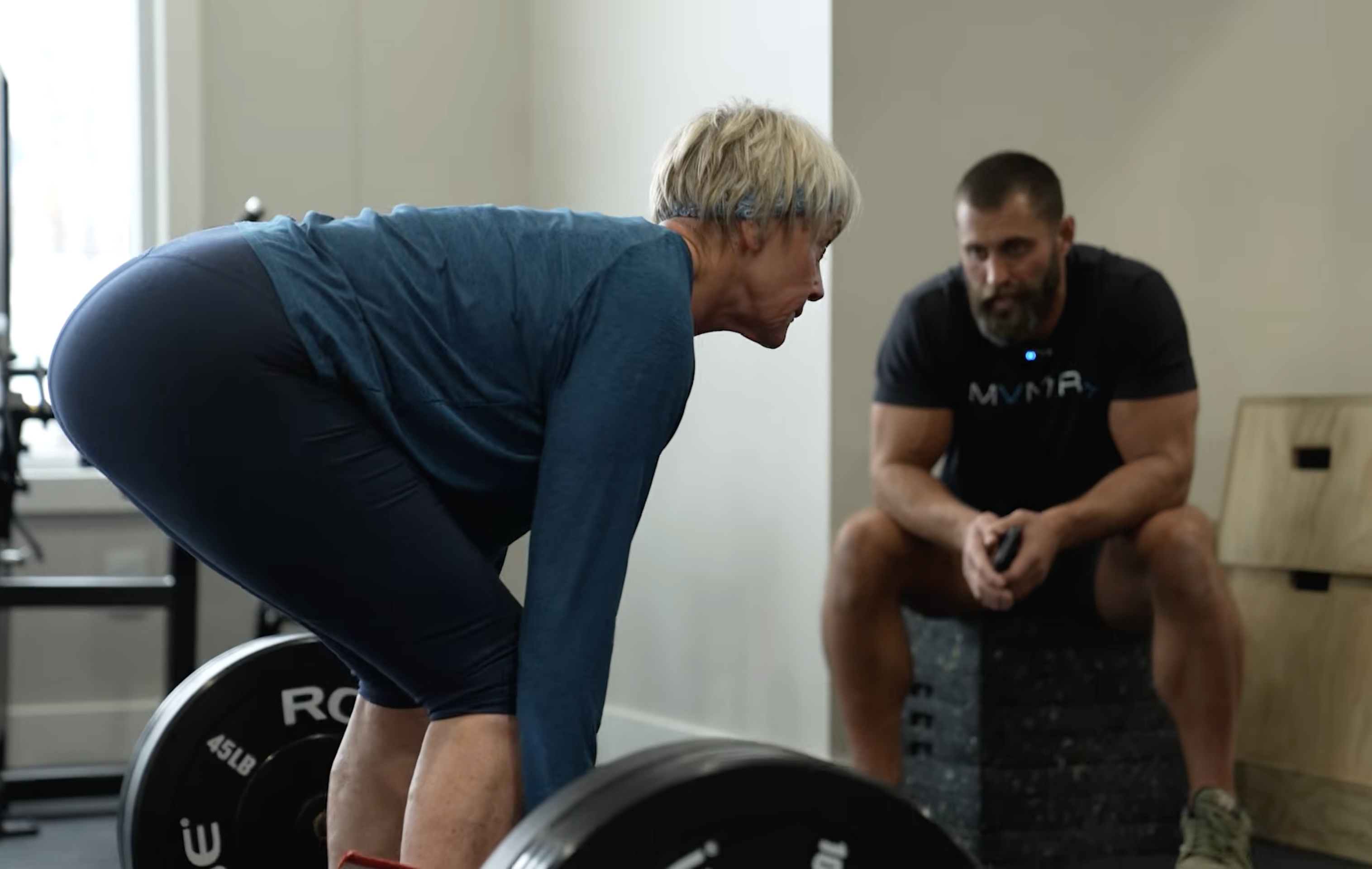
If there is one thing that separates the patients who get lasting results from the patients who keep cycling through temporary relief, it is this: progressive, clinically-designed rehabilitation. A 2017 Cochrane systematic review found that physical activity and exercise interventions reduce the severity of chronic pain and improve physical function — but the quality of the programming matters significantly.[3]
Not a sheet of exercises from a generic template. Not a personal trainer guessing at what might work. A customized rehab plan designed by a doctor who understands your specific pathology, your tissue tolerance, your movement patterns, and your real-world goals — and who adapts that plan every single week based on how your body responds.
Performance Rehab at MVMT Rx is where capacity gets built. We use objective testing — dynamometer measurements, range of motion data, limb symmetry comparisons, and comparison to active, pain-free norms — to identify where the biggest deficits are and track measurable progress over time. This is not guesswork. This is clinical decision-making driven by data, refined by over twenty years of hands-on patient care.
The reason this matters: a strength coach can write you a program. A personal trainer can make you sweat. But neither of them can assess tissue tolerance, identify compensatory movement patterns, modify load based on how an arthritic joint responds to last week's dosing, or know when to push and when to pull back based on clinical reasoning. That is what a doctor-led rehab plan provides, and it is the reason our outcomes look different from what most patients have experienced before.
What Performance Rehab at MVMT Rx includes: progressive loading programs, objective strength testing, corrective exercise, Dynamic Neuromuscular Stabilization (DNS), sport-specific training, return-to-activity programming, work capacity development, and ongoing plan adaptation based on your response — all delivered one-on-one with your doctor in 60-minute sessions. You also receive a clear plan to follow at home, at the gym, or on the road when you are traveling — so the work continues between visits, not just during them.
Deep Dives:
Knee Osteoarthritis: Why Generic Exercise Programs Fail and What a Clinical Rehab Plan Actually Looks Like → Why Your Shoulder Isn't Getting Better — And What a Doctor-Led Rehab Plan Changes → Lateral Hip Pain in Women 40–60+: Why Piriformis Stretches and Cortisone Injections Aren't Fixing It →Learn More: Performance Rehab at MVMT Rx →
How we build capacity, resilience, and robustness through progressive, doctor-led rehabilitation in Reno and Sparks, NV.
Service Spotlight
Focused Shockwave Therapy — Provoking Tissue Change
Some conditions do not respond to conventional treatment because the tissue itself is stuck in a degenerative loop. You have done the stretching. You have tried the orthotics. You have rested. And the tendon pain, the chronic tightness, the stubborn soft tissue problem is still there — because the tissue needs a fundamentally different stimulus to restart the healing process.
That is where focused shockwave therapy comes in. A 2015 systematic review in the American Journal of Sports Medicine found that extracorporeal shockwave therapy is effective for chronic lower limb tendinopathies, with focused shockwave demonstrating superior outcomes compared to radial devices for deeper tissue conditions.[4] At MVMT Rx, we use the PiezoWave 2 — a focused acoustic wave device that delivers precise, controlled energy to damaged or degenerative tissue. Unlike radial shockwave devices found in most clinics, focused shockwave reaches deeper tissue layers with greater precision, making it significantly more effective for chronic conditions that have failed to respond to standard care.
Shockwave is a tool for provoking tissue change — creating a targeted structural healing response in a specific tendon, ligament, or soft tissue structure. But here is the part most clinics miss: shockwave on its own, without progressive loading afterward, produces limited long-term results. The tissue change it creates needs to be reinforced by building capacity on top of it. That is why it works better in a multi-modal system — because the progressive rehab plan is already in place to capitalize on the window shockwave creates.
Deep Dives:
Why Your Plantar Fasciitis Won't Go Away (And What Actually Works) → Achilles Tendinopathy: Why Rest and Stretching Are Making It Worse →Learn More: Focused Shockwave Therapy at MVMT Rx →
How we use PiezoWave 2 focused shockwave for chronic tendon and soft tissue conditions in Reno and Sparks, NV.
Service Spotlight
Myofascial Release — Restoring Tissue Quality and Movement Access
When patients come in describing tightness — hips that will not open up, a back that feels locked, shoulders that are stiff no matter how much they stretch — the default answer in most clinics is more stretching. More foam rolling. More time on the floor trying to force range of motion that the body will not give up.
The reality is that chronic tightness is often a tissue quality problem, not a flexibility problem. The muscles and fascia have lost their ability to slide, contract, and lengthen normally. No amount of stretching will fix that if the tissue itself is restricted. You have to address the tissue first, then build capacity in the new range — otherwise the tightness comes right back.
Myofascial release at MVMT Rx is not spa massage. It is targeted, functional soft tissue work designed to restore normal tissue quality and movement access. And it is always paired with what comes next: progressive loading and movement training that teaches the body to own the range it just gained. That pairing — release plus reload — is why the results hold instead of fading by the next morning.
Learn More: Myofascial Release Therapy at MVMT Rx →
How we use targeted soft tissue work to restore tissue quality and movement access in Reno and Sparks, NV.
Service Spotlight
Class IV Laser Therapy — Creating the Window for Real Work
We are going to be honest about this one, because too many clinics are not: laser therapy does not fix anything by itself. It does not heal a disc. It does not rebuild a tendon. It does not strengthen a weak muscle. What it does — and does well — is reduce pain and inflammation at the tissue level, creating conditions that allow the real work of recovery to happen faster and with fewer setbacks.
Class IV laser therapy works by delivering specific wavelengths of light energy deep into tissue, where it supports cellular repair, reduces inflammatory markers, and modulates pain signaling. The clinical application is straightforward: when a patient is too irritated to load, too inflamed to progress, or dealing with a tissue that needs support during the healing process, laser therapy creates a window. And what you do inside that window is what determines the outcome.
At MVMT Rx, laser is used as a symptom modulation tool — one component of a broader plan. We do not sell standalone laser packages. We do not promise that laser alone will solve your problem. We use it when it helps, where it helps, and always in the context of a plan that is building toward something bigger than just feeling less pain today.
Learn More: Class IV Laser Therapy at MVMT Rx →
How we use Class IV laser for pain management and tissue recovery support in Reno and Sparks, NV.
This Is Who We Built This For
Why This Matters If You Refuse to Accept Less
If you are reading this, chances are you are someone who refuses to accept the idea that pain, limitation, or a body that is not performing the way you need it to is just something you have to live with. Maybe you have heard some version of "well, you are not 25 anymore" or "just rest it" from a well-meaning provider who did not know what else to say. And you have probably thought: that is not a plan.
You are right. It is not.
Many of the patients who do best at MVMT Rx are active adults over 50 who want to keep hiking, traveling, playing pickleball, training, and living a full, physically demanding life well into their 60s, 70s, and beyond. They have dealt with chronic pain, arthritis, or a body that simply does not respond the way it used to. They have tried multiple providers. They have been through the cycle. And they are looking for something that actually works long-term.
But they are not the only ones who benefit from this approach. We work with adults in their 30s and 40s who are dealing with nagging injuries that will not resolve, weekend warriors whose bodies cannot keep up with their ambitions, and young athletes — high school and college baseball, volleyball, basketball, football, golf, track, soccer — who need their bodies to perform at the highest level and cannot afford to be held back by an unresolved issue or an incomplete rehab plan. The common thread is not age. It is the refusal to settle for less than what your body is capable of.
The outcome we are building toward is not the absence of all pain. That is not realistic and it is not the point. The outcome is freedom from pain — the ability to do the things that matter to you, confidently, without your body holding you back. Some days there might be a little stiffness. An occasional ache after a big weekend. That is normal. What is not normal is living in fear of your body, avoiding the activities you love, or believing that this is as good as it gets.
You are not fragile. You are not broken. You are underloaded, undercoached, and underprepared — and that is something we know exactly how to fix.
What our patients are getting back to: long hikes with family and dogs, travel without cancelling plans due to pain, using stairs without grabbing the handrail, returning to pickleball and golf, competing at the D1 level, earning roster spots and scholarship offers, getting back to the gym with confidence, playing on the floor with grandkids, and staying physically capable and independent for decades.
Ready to Start?
What to Do Next
If what you have read here resonates — if you recognize the pattern, if you are tired of temporary relief, and if you are ready to build something that actually lasts — here is how to take the next step.
We use a simple three-step process designed to make sure this is the right fit for both of us before anyone commits to anything:
Step 1: Free Discovery Call. A 30-minute phone conversation with our patient coordinator. No pressure. No sales pitch. We listen to your story, answer your questions, and help you understand whether what we do makes sense for your specific situation. We will also walk you through what the investment range looks like so there are no surprises.
Step 2: Free Discovery Visit. A 60-minute, in-person visit at our clinic where you meet one of our doctors. This is a hands-on assessment designed to uncover the root cause of your problem — which is often away from the site of pain entirely. We walk through your full history, perform a functional evaluation, and give you a clear picture of what is actually driving your issue and why previous care may not have addressed it. The goal is to make sure — with 100% confidence on both sides — that you are in the right place and we can help.
Step 3: Evaluation and First Treatment Session. If we both agree this is the right fit, the next step is a comprehensive evaluation where we shore up any additional assessment information needed to get a complete clinical picture. Then we take everything from our discussion and examination findings and turn it into a structured treatment session — so you can experience firsthand what a high-intention, 60-minute session looks like, see how your body responds to care, and understand exactly what we are building toward. From there, we make a clear clinical recommendation on a plan of care designed to help you achieve your desired outcome. Together, we decide on the total length of time, frequency, and investment — if it is something you are ready to commit to.
There is no obligation at any step. With over twenty combined years of clinical experience, there is rarely a case presentation we have not seen. But if we do not feel confident we can help you, we will be the first to tell you — and we will refer you to whoever can.
MVMT Rx Sports Care & Chiropractic | Reno & Sparks, NV | (775) 245-4142
Common Questions
Frequently Asked Questions
What makes MVMT Rx different from other chiropractors and physical therapists in Reno?
Three things. First, every session is 60 minutes, one-on-one with your doctor — you are never handed off to an aide or technician. Second, we combine chiropractic care, clinical rehabilitation, shockwave therapy, laser therapy, and myofascial release under one roof, guided by a single clinical reasoning model called the RAIL System. Third, our plans are designed around objective testing and progressive loading — not generic protocols. Your plan adapts with you as your body changes.
Do I need insurance or a referral?
No referral is needed. MVMT Rx is a cash-pay practice, which means we do not accept or bill insurance directly. This allows us to spend the time each patient actually needs — 60 full minutes, one-on-one with your doctor — without the limitations insurance companies place on care. No pre-authorizations, no arbitrary visit caps, no corners cut. We do provide superbills with diagnosis and treatment codes that you can submit to your insurance for potential reimbursement. We also offer in-house payment plans, and we are credentialed with CareCredit, which provides no-interest and low-interest financing options for medical care. Most of our patients choose our paid-in-full option because once they commit fully, they feel fully invested and ready to do the work.
How long is a typical plan of care?
Most initial plans of care run three to five months, depending on the complexity of the condition and the goals you are working toward. Plans are not based on an arbitrary number of visits — they are based on where you are now, where you need to be, and the objective markers that show us when each phase is complete. Many patients continue into second and third plans as they pursue new goals or higher levels of performance.
What if I have already tried physical therapy and it did not work?
That is one of the most common things we hear. In most cases, physical therapy did not fail — the approach was just too narrow. Many PT clinics use high-volume models with limited one-on-one time, generic exercise protocols, and no progressive loading strategy. If your PT experience felt like a checklist rather than a customized plan, the issue was the model, not your body. Our approach is built specifically for patients who have been through that experience and need something more comprehensive.
What if I have already tried chiropractic and it did not work?
We hear this often, and it is important to understand what actually happened. Traditional chiropractic care focuses almost exclusively on spinal adjustments — and adjustments are a valuable tool for reducing pain and restoring joint motion. But when that is the entire plan, it is incomplete. The issues that brought you to a chiropractor in the first place are almost never structural problems that need "realignment." They are functional problems — capacity deficits, movement pattern breakdowns, tissue tolerance limitations — that require a multi-modal approach to resolve. Adjustments address one piece of the puzzle. MVMT Rx addresses the whole picture. That is why our results look different.
Can you help with knee osteoarthritis without surgery?
Yes. Knee osteoarthritis is one of the most common conditions we treat. A Cochrane systematic review of 54 randomized controlled trials found that therapeutic exercise significantly reduces pain and improves physical function in adults with knee osteoarthritis — and in many cases can delay or eliminate the need for joint replacement.[5] But here is what most providers miss — the knee is rarely where the problem started. Years of asymmetries in the hip, ankle, or core create compensatory movement patterns that overload the knee joint over time, accelerating degeneration. If you only treat the knee without addressing the root cause of that overload, you are managing symptoms while the underlying driver continues. Our approach zooms out to find the long-term roots of the issue — the asymmetries, the capacity deficits, the compensations that have been building for years — and addresses them systematically alongside the knee itself.
What does a Discovery Visit include?
A 60-minute, in-person visit with one of our doctors designed to uncover the root cause of your problem. We walk through your full history, discuss what you have tried before, perform a functional assessment, and identify what is actually driving your issue — which is often completely separate from where you feel the pain. The purpose is to make sure, with 100% confidence on both sides, that you are in the right place and we can help. With over twenty combined years of hands-on clinical experience, there is rarely a case we have not seen. But if we do not feel confident we can help, we will be the first to tell you — and we will refer you to whoever can.
What conditions do you treat?
We work with a wide range of musculoskeletal conditions, with a particular focus on active adults dealing with chronic low back pain, knee osteoarthritis, shoulder pain and rotator cuff issues, neck pain, sciatica, hip pain and tightness, plantar fasciitis, Achilles tendinopathy, disc herniations, and chronic pain that has not responded to traditional care. If you are not sure whether your condition fits, the Discovery Call is the fastest way to find out.
Ready to Break the Cycle?
If you are tired of temporary relief and ready to build something that lasts, start with a free conversation. No pressure. No commitment. Just clarity.
Book Your Free Discovery CallMVMT Rx Sports Care & Chiropractic | Reno & Sparks, NV | (775) 245-4142
References
- Chou R, Deyo R, Friedly J, et al. Nonpharmacologic Therapies for Low Back Pain: A Systematic Review for an American College of Physicians Clinical Practice Guideline. Annals of Internal Medicine. 2017;166(7):514–530. doi:10.7326/M16-2459
- Paige NM, Miake-Lye IM, Booth MS, et al. Association of Spinal Manipulative Therapy With Clinical Benefit and Harm for Acute Low Back Pain: Systematic Review and Meta-analysis. JAMA. 2017;317(14):1451–1460. doi:10.1001/jama.2017.3086
- Geneen LJ, Moore RA, Clarke C, et al. Physical activity and exercise for chronic pain in adults: an overview of Cochrane Reviews. Cochrane Database of Systematic Reviews. 2017;(4):CD011279. doi:10.1002/14651858.CD011279.pub3
- Mani-Babu S, Morrissey D, Waugh C, et al. The Effectiveness of Extracorporeal Shock Wave Therapy in Lower Limb Tendinopathy: A Systematic Review. American Journal of Sports Medicine. 2015;43(3):752–761. doi:10.1177/0363546514531911
- Fransen M, McConnell S, Harmer AR, et al. Exercise for osteoarthritis of the knee. Cochrane Database of Systematic Reviews. 2015;(1):CD004376. doi:10.1002/14651858.CD004376.pub3


Free Guides
Patient Care
Links
© Copyright 2026. MVMT Rx Sports Care & Chiropractic. All Rights Reserved.