
Shockwave Therapy & Plantar Fasciitis
Why Your Plantar Fasciitis Won't Go Away (And What Actually Works)
You have tried the stretches. The orthotics. The ice. The night splints. And every morning you still take your first step and feel that sharp stab in your heel. Here is why — and what it actually takes to fix it.
The Pattern
The Stretch-Ice-Rest Cycle That Never Ends
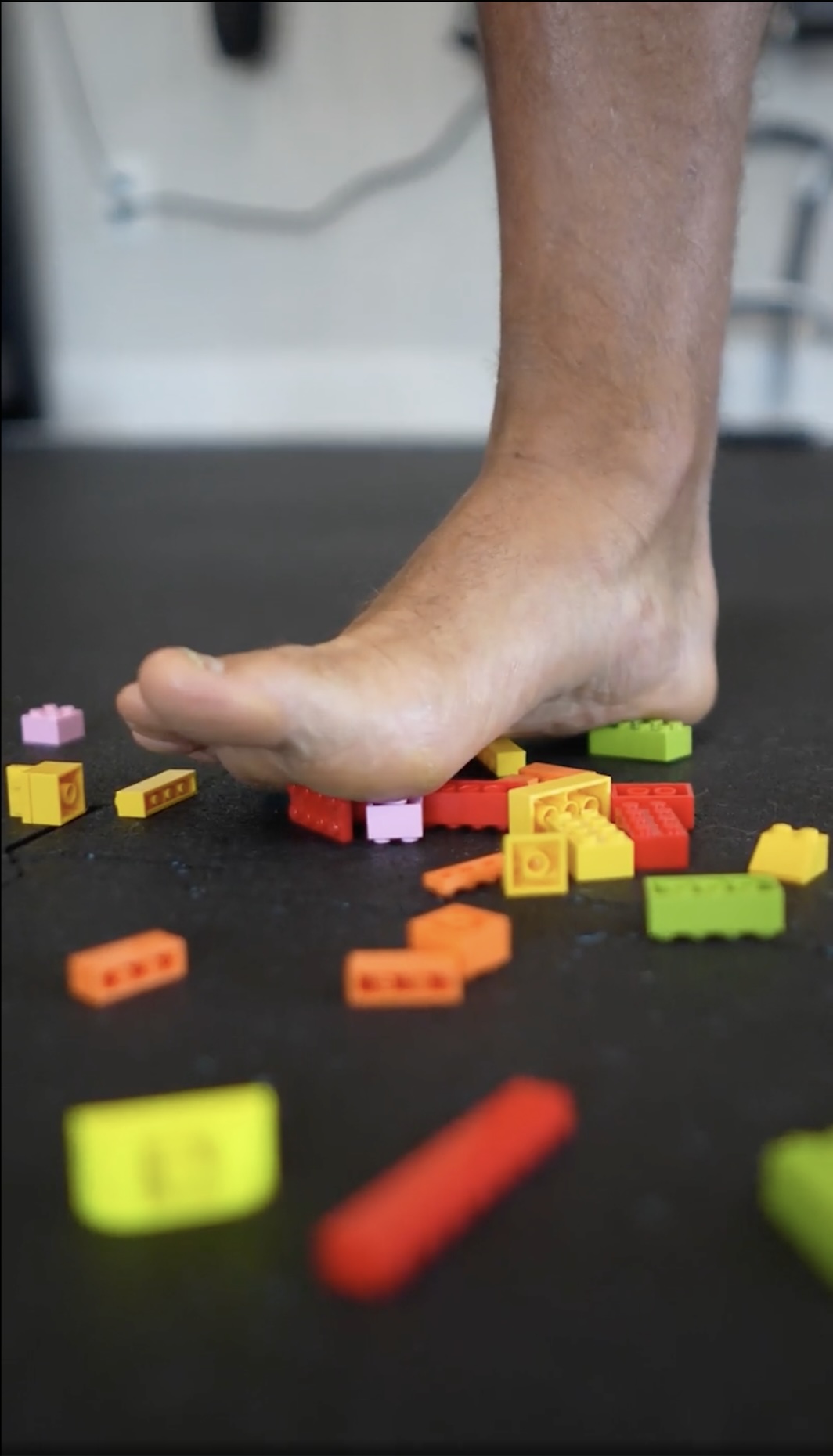
You wake up, swing your feet off the bed, and the moment your heel touches the floor it feels like stepping on a Lego — except nobody left a Lego there. That sharp, stabbing pain at the bottom of your foot is just your body reminding you that something is still very wrong. It has been there for months. Maybe longer. And you have done everything you were told to do.
You rolled a frozen water bottle under your foot. You did the calf stretches against the wall. You bought the expensive orthotics. You wore the night splint. You took the ibuprofen. You rested. You avoided walking too much on the weekends. You tried the cortisone injection, and it actually worked — for about six weeks. Then the pain came back, exactly where it was, as if nothing had changed.
Because nothing did change.
If you are reading this in Reno or Sparks and you have been fighting plantar fasciitis for more than a few months, what you are experiencing is not a stretching problem, a shoe problem, or a rest problem. It is a tissue problem — and the standard advice you have been given does not address it. You are not doing anything wrong. The approach is wrong.
Common experiences patients describe before finding MVMT Rx: sharp heel pain every morning that improves after walking around, pain that returns after sitting or standing for long periods, failed orthotics, failed cortisone injections, months of stretching with no lasting improvement, being told to rest when resting changes nothing, pain that gets worse after long walks or hikes, and the growing frustration of not being able to stay active without paying for it the next morning.
The Real Issue
Why Stretching, Orthotics, and Rest Are Not Fixing Your Plantar Fasciitis
Plantar fasciitis is one of the most commonly treated — and most commonly mistreated — foot conditions in musculoskeletal medicine. The standard protocol has barely changed in decades: stretch the calf, ice the heel, wear supportive shoes, take anti-inflammatories, and wait. If that does not work, inject cortisone. If that does not work, consider surgery.
The problem with this approach is that it treats plantar fasciitis as if it were an acute inflammatory condition — as if the tissue is simply irritated and needs to calm down. And in the early stages, that may be partially true. But by the time most patients walk into our clinic, they are months or years past the acute phase. At that point, what is happening in the plantar fascia is not inflammation. It is degeneration.
The clinical community has largely moved away from the term "plantar fasciitis" because it implies a simple inflammatory condition — and in chronic cases, that is not what is happening. The more accurate term used in current literature is plantar heel pain, because the problem is rarely isolated to the fascia alone. It can involve the fat pad, the intrinsic foot muscles, nerve irritation, enthesopathy at the calcaneal insertion, or a combination of structures. What they share in common is a degenerative process: the tissue has been chronically overloaded, has failed to heal properly, and is now structurally compromised. The collagen fibers become disorganized. The tissue thickens in some areas and weakens in others. Blood flow diminishes. The normal repair cycle stalls. And no amount of stretching, icing, or resting will restart it — because those interventions do not address the tissue pathology. They manage symptoms while the structural problem persists underneath.
A 2019 systematic review in the British Journal of Sports Medicine found that while stretching and orthotics provide modest short-term pain relief for plantar heel pain, neither intervention produces reliable long-term resolution — particularly in cases lasting longer than three months.[1] The reason is straightforward: symptom management does not equal tissue repair.
Cortisone injections deserve a special mention. A 2017 meta-analysis in the Journal of Foot and Ankle Research found that corticosteroid injections provide short-term pain relief for plantar fasciitis but show no benefit beyond six weeks — and carry a measurable risk of plantar fascia rupture, which can create a significantly worse problem than the one you started with.[2] Cortisone does not heal tissue. It suppresses the pain signal. And when the signal returns, the tissue is often in worse condition than before the injection.
This is why your plantar fasciitis is not going away. You are not failing to follow the plan. The plan is failing to address the actual problem.
Looking Deeper
Your Heel Is Where the Problem Ended Up — Not Where It Started
Here is something most providers never assess when treating plantar fasciitis: the foot is at the bottom of a chain, and it absorbs the consequences of everything happening above it.
When you walk, run, hike, or stand for extended periods, forces travel down through your hip, knee, ankle, and into the foot. If there are capacity deficits or mobility restrictions anywhere in that chain, the plantar fascia ends up absorbing load it was never designed to handle on its own. Over time, that excess load exceeds the tissue's tolerance — and degeneration begins.
At MVMT Rx, we do not just look at your heel. We assess the entire lower extremity chain to identify what is actually driving the overload. We use objective measurements — range of motion testing, strength assessment, single-leg balance evaluation, and gait analysis — to find the real contributors.
Common root cause drivers of chronic plantar fasciitis: calf and soleus tightness or weakness limiting ankle dorsiflexion, intrinsic foot muscle weakness and poor arch control, hip weakness and lateral stability deficits leading to excessive foot pronation, quad and hamstring endurance deficits that alter gait mechanics, ankle mobility restrictions from old sprains, reduced great toe extension limiting push-off mechanics, deconditioning from prolonged activity avoidance, lumbar spine and tibial nerve involvement that mimics or amplifies heel pain, and excess body weight combined with insufficient tissue capacity for daily demands.
And there is another driver that rarely gets assessed: the lumbar spine and the nerves that travel from it. The tibial nerve — which runs from your low back, through the back of your leg, and into the bottom of your foot — can produce heel and arch pain that looks and feels exactly like plantar fasciitis. You may not even have back symptoms. The nerve irritation can be completely silent at the spine and only show up as foot pain. This is where our training in clinical neurodynamics becomes critical — it gives us the tools to assess how nerves move and slide through the body, identify where a nerve sliding dysfunction is occurring, and determine whether the lumbar spine is contributing to your foot symptoms even when it does not hurt. Without this assessment, you could spend months treating a foot problem that is actually a nerve problem — and never get better.
When a provider looks only at the heel — stretches the calf, injects the fascia, and hands you an orthotic — they are treating the symptom at the end of a chain without ever asking why the tissue failed in the first place. That is why it keeps coming back.
A Different Approach
Focused Shockwave Therapy: Restarting What the Body Cannot Fix on Its Own
When plantar fascia tissue has been degenerating for months, it needs a categorically different stimulus to restart the healing process. Stretching will not do it. Rest will not do it. The tissue is stuck — and it needs to be provoked into a repair response.
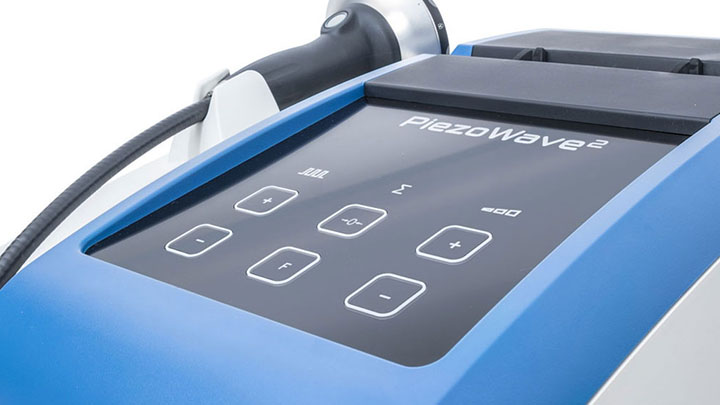
That is exactly what focused shockwave therapy does. At MVMT Rx, we use the PiezoWave 2 — a focused acoustic wave device that delivers precise, controlled energy directly to the damaged tissue. Unlike radial shockwave devices found in most clinics (which scatter energy broadly across the surface), focused shockwave penetrates deeper with greater precision, targeting the specific area of degeneration within the plantar fascia.
The research supports this clearly. A 2017 meta-analysis published in the Journal of Orthopaedic Surgery and Research found that extracorporeal shockwave therapy is effective for chronic plantar fasciitis, with focused shockwave demonstrating superior outcomes compared to radial devices — particularly for cases that have failed conservative treatment.[3] A 2020 systematic review in Clinical Rehabilitation confirmed that shockwave therapy produces significant improvements in both pain and function for plantar fasciitis, with effects sustained at 12-month follow-up.[4]
But here is the part most clinics miss — and the reason shockwave alone often produces incomplete results: shockwave restarts the tissue repair process, but the new tissue that forms needs to be progressively loaded to develop the strength and tolerance required for real-world demands. Without that loading phase, you end up with tissue that is technically "healed" but structurally inadequate. It breaks down again under the same loads that caused the problem in the first place.
This is why doing everything under one roof matters. At MVMT Rx, your shockwave session and your progressive rehabilitation happen in the same visit, with the same doctor. We provoke the tissue change, then we load it — strategically, progressively, while the healing window is open. It is the same "hit the save button" principle we use across all of our care: create the change, then train the body to keep it.
The Full Plan
How the RAIL System Solves Plantar Fasciitis That Nothing Else Has Fixed
At MVMT Rx, shockwave therapy is not the plan. It is one tool inside a clinical reasoning framework called the RAIL System that guides every decision we make — from your first visit through long-term resolution.
Relief — The first priority is to reduce the pain enough that you can start doing real work. For plantar fasciitis, this often includes focused shockwave therapy to restart tissue repair, Class IV laser to manage inflammation and pain signaling, soft tissue work on the calf and foot complex, chiropractic adjustments to restore ankle and midfoot joint mobility, and activity modification so you are not constantly re-aggravating the tissue. Relief matters. But it is where most providers stop — and it is only Phase 1.
Adaptation — Once the tissue begins responding and the pain is manageable, we start rebuilding the capacity that was missing. Progressive calf and soleus loading — isometrics first, then slow eccentrics, then heavier loaded work. Intrinsic foot strengthening to rebuild arch control. Ankle mobility restoration. Hip and lateral stability work to correct the movement patterns that were overloading the foot in the first place. This is where the tissue develops real tolerance — the ability to handle your daily demands without breaking down again.
Integration — This is where we start challenging the body with complex multi-joint exercises, driving real strength and power adaptations, and introducing plyometric progressions when applicable to your goals. For plantar fasciitis patients specifically, this is critical — your foot and ankle complex need to regain their energy storage and return capabilities, which is what allows you to push off, land, absorb force, and move explosively without the tissue breaking down again. Early in this phase we are building strength, power, and movement complexity in the gym. As you progress, we start integrating your real-world demands — hiking on uneven terrain, long walks, running, standing all day at work — and blending outdoor and sport-specific activity heavily with the gym work for optimal transferability. By the end of Integration, you are not just pain-free. You are performing at a level your body can sustain.
Lifespan — You graduate with the tools, the capacity, and the body awareness to manage your feet long-term. You understand what your body needs, you know how to train it, and you have the confidence to stay active without fear of the pain returning every time you push yourself.
What a plantar fasciitis plan at MVMT Rx may include: focused shockwave therapy (PiezoWave 2) to restart tissue repair, Class IV laser therapy for pain and inflammation management, chiropractic adjustments to restore ankle and midfoot mobility, progressive calf and soleus loading protocols, intrinsic foot muscle strengthening, hip and lateral stability training, gait mechanics assessment and correction, development of body awareness and training acumen so you feel confident managing your own recovery, objective retesting to track measurable tissue and functional progress, and ongoing plan adaptation based on your body's response.
Learn More: Focused Shockwave Therapy at MVMT Rx →
How we use PiezoWave 2 focused shockwave for chronic tendon and soft tissue conditions — including plantar fasciitis — in Reno and Sparks, NV.
Read the Full Guide: Why a Multi-Modal Approach Works →
Our complete breakdown of the RAIL System, our clinical toolkit, and why single-modality care fails for chronic pain.
Related: Why Your Low Back Pain Keeps Coming Back After Every Adjustment →
How DNS, McKenzie-based assessment, and progressive loading fix what adjustments alone cannot — and why the lumbar spine may be driving your foot pain too.
Related: Knee Osteoarthritis — Why Generic Exercise Programs Fail →
Why your X-ray does not define your ceiling, and how objective testing and progressive loading change the outcome for knee OA.
Related: Why Your Shoulder Isn't Getting Better →
Rotator cuff tears, impingement myths, and what a doctor-led performance rehab plan actually changes for persistent shoulder pain.
Related: Neck Pain After Failed Chiropractic Care — What's Actually Going On →
Why adjustments alone keep you in a relief cycle, and how McKenzie assessment, neurodynamics, and progressive rehab change the outcome.
Related: Achilles Tendinitis — Why Rest and Stretching Are Making It Worse →
Focused shockwave therapy, progressive loading, and midfoot mobility — why rest and cortisone fail for chronic Achilles tendon pain.
Related: Hip Pain — Why Stretching and Foam Rolling Aren't Fixing Your Hips →
Clinical myofascial release, DNS, and progressive hip rehabilitation — why self-stretching fails for chronic hip pain.
Related: Herniated Disc — What Your MRI Isn't Telling You →
Class IV laser therapy, McKenzie assessment, neurodynamics, and progressive loading — why rest and fear make disc herniations worse.
Related: The Hidden Cost of Daily Tylenol and NSAIDs →
What the research says about daily OTC painkiller use — liver damage, GI bleeding, cardiovascular risk, delayed healing, and why your pain deserves a better answer than medication.
What This Looks Like
What a Plantar Fasciitis Plan Actually Looks Like at MVMT Rx
Every patient is different, but here is the general shape of how we approach chronic plantar fasciitis — the kind that has not responded to stretching, orthotics, cortisone, rest, or the standard "just give it time" advice you have heard too many times.
Discovery Visit: A 60-minute, in-person assessment where we walk through your full history, perform a functional evaluation of the entire lower extremity chain — not just the heel — and give you a clear picture of what is actually driving your pain. We assess ankle mobility, calf and soleus function, intrinsic foot strength, hip stability, and how your body moves under load. This is a root cause assessment, not a sales pitch. The goal is mutual confidence that you are in the right place and we can help.
Evaluation and First Treatment: If we both agree it is the right fit, we complete the clinical picture with additional assessment, then turn everything into a structured treatment session. You experience firsthand what a high-intention, 60-minute session looks like — shockwave, manual therapy, and targeted loading in the same visit. From there, we make a clinical recommendation on a plan of care — including time, frequency, and investment — decided together.
Ongoing Care: Every session is 60 minutes, one-on-one with your doctor. Your plan adapts weekly based on how your tissue responds. Shockwave sessions are spaced strategically — typically weekly for 4-6 sessions — and paired with progressive loading that builds between visits. You receive programming to follow at home, at the gym, or on the road. You are coached, progressed, and held accountable through every phase of recovery. And you develop the movement literacy and body awareness to confidently manage your own feet for life.
Frequently Asked Questions
Plantar Fasciitis & Shockwave Therapy
How is focused shockwave different from radial shockwave?
Radial shockwave devices scatter energy broadly across the surface — useful for superficial conditions but limited in depth and precision. Focused shockwave, like the PiezoWave 2 we use at MVMT Rx, delivers concentrated acoustic energy to a specific depth and location within the tissue. For plantar fasciitis, this means we can target the exact area of degeneration within the fascia with significantly greater precision, which is why the research shows superior outcomes for focused devices in chronic cases.
Does shockwave therapy hurt?
Most patients describe it as a deep, pulsing pressure — uncomfortable in the moment but very tolerable. Sessions typically last 5-10 minutes for the shockwave portion. The intensity is adjusted based on your tolerance and the tissue's response. Many patients feel immediate improvement in pain levels after the first session, though the real structural changes build over the course of 4-6 sessions as the tissue repair process progresses.
Why didn't my orthotics fix my plantar fasciitis?
Orthotics can reduce symptoms by offloading the fascia — essentially providing external support so the tissue does not have to do as much work. But they do not address why the tissue failed in the first place. If the root cause is calf weakness, poor hip stability, or insufficient foot muscle strength, an orthotic is a crutch that manages symptoms without building capacity. Once you take it off, the same deficits are still there. Our approach builds the capacity your foot actually needs — so you do not need external support to function.
How long does it take to fix plantar fasciitis with this approach?
Most patients see significant pain reduction within the first 3-4 weeks as shockwave restarts tissue repair and progressive loading begins rebuilding capacity. Full resolution — meaning you are back to all activities without symptoms and the tissue has the tolerance to stay that way — typically takes 3-5 months depending on how long the condition has been present and how your body responds. Chronic cases that have been present for over a year may take longer because the tissue degeneration is more advanced.
Can I still walk and stay active during treatment?
Yes — and we want you to. Complete rest is counterproductive for chronic plantar heel pain because the tissue needs controlled loading to heal. We modify your activity levels strategically — reducing the loads that aggravate the tissue while introducing the specific loads that drive tissue adaptation. The goal is to keep you moving throughout recovery, not to shut you down and hope the problem resolves on its own.
Do you accept insurance?
MVMT Rx is a cash-pay practice. We provide superbills that you can submit to your insurance for potential reimbursement depending on your plan. We also offer in-house payment plans, CareCredit (no- and low-interest medical financing), and paid-in-full discounts for patients who are fully invested and ready to commit to the process.
References
- Babatunde OO, Legha A, Littlewood C, et al. Comparative effectiveness of treatment options for plantar heel pain: a systematic review with network meta-analysis. British Journal of Sports Medicine. 2019;53(3):182–194. doi:10.1136/bjsports-2017-098998
- David JA, Sankarapandian V, Christopher PR, et al. Injected corticosteroids for treating plantar heel pain in adults. Cochrane Database of Systematic Reviews. 2017;(6):CD009348. doi:10.1002/14651858.CD009348.pub2
- Sun J, Gao F, Wang Y, et al. Extracorporeal shock wave therapy is effective in treating chronic plantar fasciitis: a meta-analysis of RCTs. Journal of Orthopaedic Surgery and Research. 2017;12:78. doi:10.1186/s13018-017-0581-x
- Li H, Lv H, Lin T. Comparison of efficacy of eight treatments for plantar fasciitis: a network meta-analysis. Journal of Cellular Physiology. 2018;234(1):860–870. doi:10.1002/jcp.26907
- Rathleff MS, Mølgaard CM, Fredberg U, et al. High-load strength training improves outcome in patients with plantar fasciitis: a randomized controlled trial with 12-month follow-up. Scandinavian Journal of Medicine & Science in Sports. 2015;25(3):e292–e300. doi:10.1111/sms.12313
Done Fighting Your Feet Every Morning?
If your plantar fasciitis has not responded to stretching, orthotics, cortisone, or rest — the problem is not your commitment. It is the approach. Start with a free conversation.
Book Your Free Discovery CallMVMT Rx Sports Care & Chiropractic | Reno & Sparks, NV | (775) 245-4142



Free Guides
Patient Care
Links
© Copyright 2026. MVMT Rx Sports Care & Chiropractic. All Rights Reserved.