
Myofascial Release in Reno and Sparks, NV
Targeted Myofascial Release Therapy in Reno — Not a Spa Visit
Assessment-driven soft tissue treatment delivered by your doctor during 60-minute one-on-one sessions. Integrated into a real plan — never used in isolation.
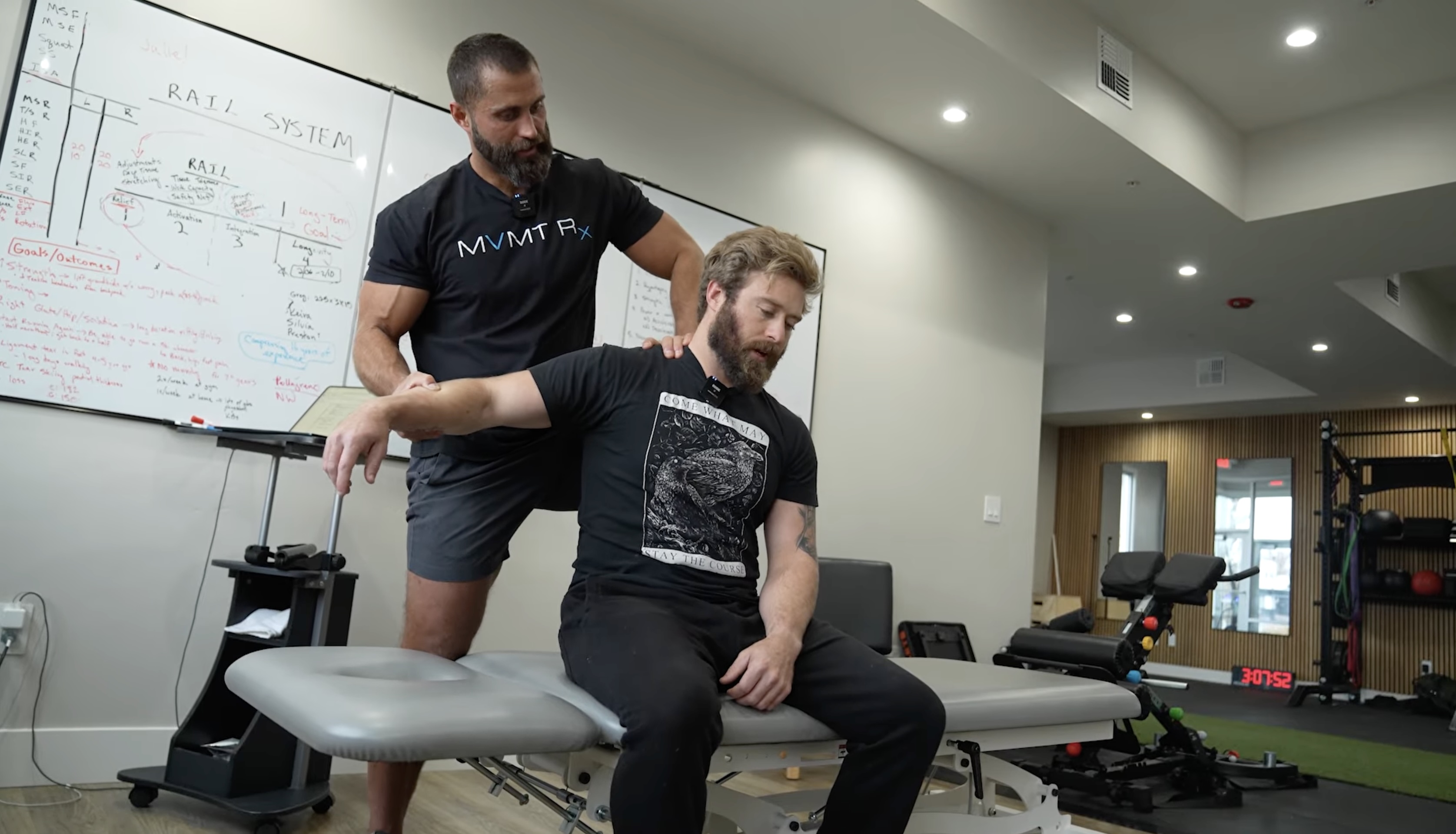
Myofascial release has become a buzzy term. It gets tossed around in massage therapy, physical therapy, chiropractic, and even yoga studios. Foam rollers, lacrosse balls, percussion guns — everyone claims they are doing myofascial release.
Most of it is surface-level guesswork.
At MVMT Rx, myofascial release therapy is a clinical, targeted treatment delivered by your doctor during a 60-minute one-on-one session. It is guided by your assessment findings, integrated into your broader treatment plan, and designed to address the specific tissue restrictions that are limiting your ability to move, load, and recover — not just the spots that feel tight.
If you have been searching for myofascial release in Reno or Sparks and want something more than a glorified massage, this page explains exactly how we use it, when it matters, and why the provider doing it makes all the difference.
The Science Behind It
What Myofascial Release Actually Is — and What It Is Not
Your fascia is a continuous web of connective tissue that surrounds and connects every muscle, bone, joint, nerve, and organ in your body. When fascia becomes restricted — through injury, chronic tension, repetitive stress, surgery, or prolonged inactivity — it can limit range of motion, alter movement patterns, compress nerves, and contribute to pain in areas far from the actual restriction.
Myofascial release therapy applies sustained, controlled pressure to fascial restrictions to restore tissue mobility, improve blood flow, and reduce the mechanical limitations that are preventing your body from moving and functioning normally.
Here is what it is not: it is not a relaxation massage. It is not a spa treatment. It is not digging into whatever spot hurts the most and hoping that helps. Effective myofascial release requires understanding which tissues are actually restricted, why they are restricted, and how those restrictions connect to your larger movement problem. That requires an assessment — not just hands on a muscle.
Our Approach
How We Use Myofascial Release at MVMT Rx
We do not use myofascial release as a standalone service. It is one component of your treatment plan, used when your assessment shows specific soft tissue restrictions that are contributing to your pain or limiting your movement.
Assessment-Driven Targeting
Before we ever put hands on tissue, we have already completed objective testing — range of motion, functional movement assessment, strength testing — that tells us where the real restrictions are. We do not guess. We do not just treat where it hurts. We treat where the data says the restriction lives.
Integrated with Your Adjustment and Rehab Plan
Myofascial release often works best in combination with chiropractic adjustments and corrective exercise. Release the tissue restriction, restore joint motion through adjustment, then load the newly available range through progressive exercise. That sequence is far more effective than any single treatment in isolation.
Applied with Progression in Mind
The goal of myofascial release is not to make you feel loose temporarily. The goal is to restore tissue quality and mobility so that you can access and strengthen new ranges of motion. If we release a restriction but never build capacity in that range, the restriction comes back. Our approach ensures that every release session feeds directly into your rehab progression.
When It Matters Most
Common Issues Myofascial Release Helps Address
Myofascial release at MVMT Rx is frequently part of the treatment plan for patients in Reno and Sparks dealing with:
Chronic Muscle Tightness That Does Not Respond to Stretching
If you have been stretching your hamstrings for years and they still feel tight, the issue is probably not muscle length — it is a fascial restriction, a neural tension pattern, or a stability deficit that your body is protecting with tension. Myofascial release can address the tissue component while your rehab addresses the underlying cause.
Post-Surgical Scar Tissue and Adhesions
Surgery creates scar tissue. Scar tissue restricts movement. Myofascial release can improve the quality and mobility of scar tissue, particularly after joint surgeries, spinal procedures, or any operation that involved soft tissue disruption.
Restricted Range of Motion Limiting Rehab Progress
Sometimes a patient hits a ceiling in their rehab — they cannot access a range of motion no matter how much they work on it. Myofascial release can break through that ceiling by addressing the tissue restriction that mobility work alone cannot resolve.
Headaches and Neck Tension from Upper Body Restrictions
Fascial restrictions in the cervical spine, thoracic spine, and shoulder girdle are common contributors to tension headaches and chronic neck stiffness. When the restriction is fascial — not just muscular — standard stretching and massage often miss it entirely.
Chronic Hip, Shoulder, or Low Back Stiffness in Active Adults
Our patients over 50 frequently present with accumulated fascial restrictions from decades of activity, injury, and compensation. Targeted release combined with progressive loading is one of the most effective approaches for restoring comfortable, confident movement.
Provider Matters
Why It Matters That a Doctor Does This — Not a Massage Therapist
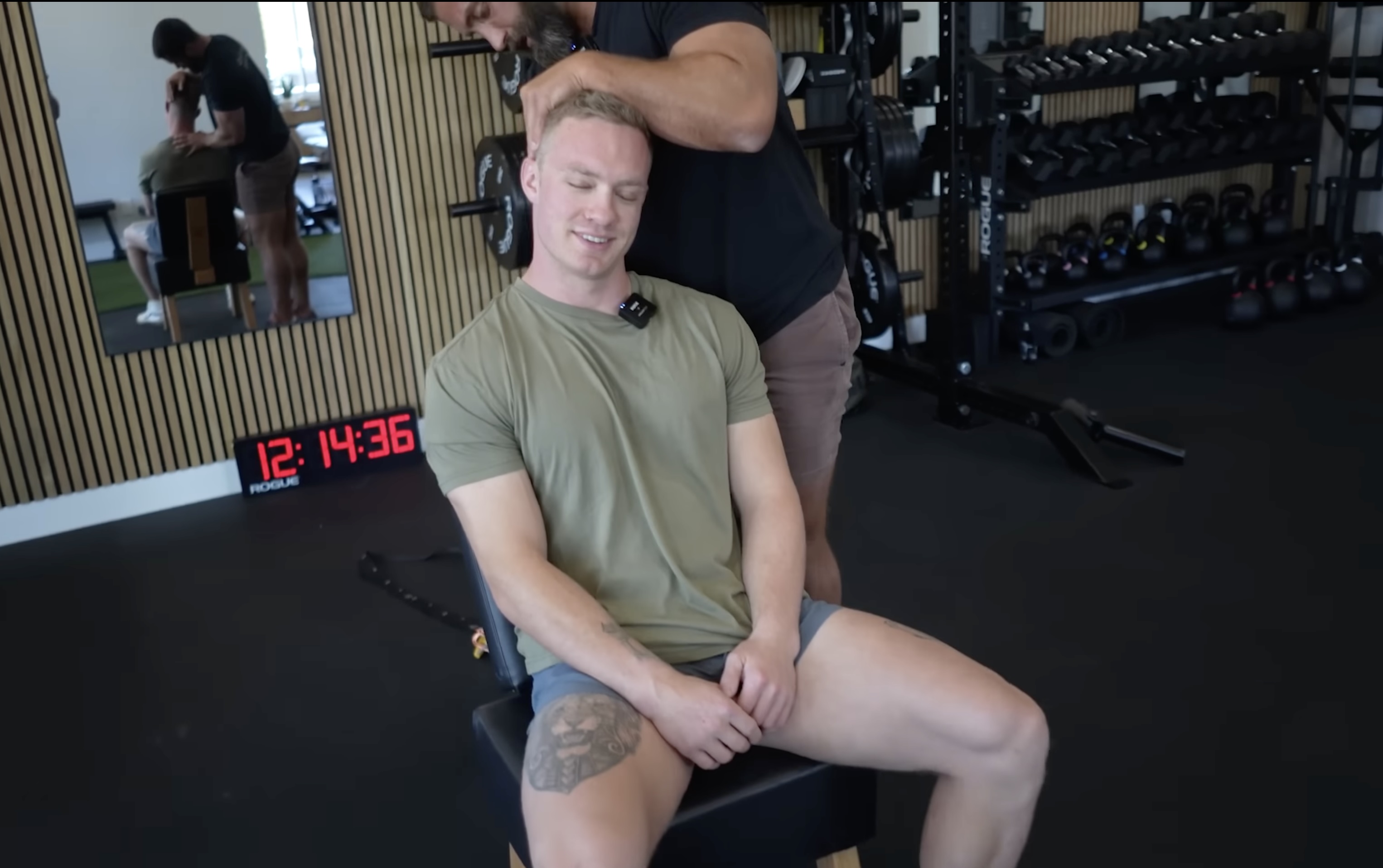
This is not a knock on massage therapists. They serve a valuable role. But clinical myofascial release in the context of a sports care and rehabilitation plan requires a different level of assessment and integration.
Identifies why the restriction exists
Your doctor assesses your movement to determine the root cause — not just where the tissue feels tight, but why it became restricted in the first place.
Connects tissue findings to the full picture
Fascial restrictions do not exist in a vacuum. Your doctor connects the tissue findings to your joint function, strength deficits, and movement patterns — all in the same visit.
Integrates the release into a progressive plan
Every release session feeds directly into your treatment plan — adjustments, corrective exercise, and progressive loading. No separate referrals. No losing continuity.
Monitors whether the restriction is resolving
Objective testing before and after treatment shows whether the fascial restriction is actually improving — not just whether you feel different that day.
What We Reject
What You Will Not Experience During Myofascial Release at MVMT Rx
No feel-good treatments designed to keep you coming back
If your restriction resolves and you no longer need hands-on tissue work, we redirect that time toward rehab and loading — the work that keeps the problem from returning.
No blaming everything on fascia
The wellness industry has turned fascia into a catch-all explanation for every ache and pain. We use myofascial release when tissue restriction is objectively present and contributing to your problem — not as a default treatment for everything.
No myofascial release in isolation
If a provider is only doing soft tissue work and never addressing the capacity, strength, and loading requirements that prevent recurrence, they are managing your symptoms — not solving your problem.
Who It Helps
Who Benefits Most from Myofascial Release Therapy
The patients in Reno and Sparks who see the most meaningful results from myofascial release at MVMT Rx are typically active adults over 50 who have tried massage, foam rolling, stretching, and other surface-level approaches without lasting improvement.
They are dealing with chronic tightness that limits their hiking, their gym sessions, their travel, or their ability to keep up with the activities that define who they are. They are not looking for a spa experience. They want their body to actually work better.
If that sounds like you — and especially if you have been told your only options are surgery, more stretching, or learning to live with it — myofascial release integrated into a real treatment plan is worth exploring.
Patient Reviews
What Patients Say About Soft Tissue Treatment at MVMT Rx
Real reviews from patients in Reno and Sparks whose treatment included targeted myofascial release.
Common Questions
Frequently Asked Questions About Myofascial Release
What is the difference between myofascial release and massage?
Massage is typically a general treatment focused on relaxation and broad muscle tension relief. Clinical myofascial release at MVMT Rx is an assessment-driven treatment that targets specific fascial restrictions identified through objective testing. It is integrated into a comprehensive plan that includes adjustments, corrective exercise, and progressive loading — not used in isolation.
How long do the effects of myofascial release last?
The effects last longer when combined with progressive loading and corrective exercise that builds capacity in the newly available range. If you only release a restriction but never strengthen the area, the restriction tends to return. Our approach ensures every release session feeds directly into your rehab progression so the changes stick.
Is myofascial release painful?
Myofascial release involves sustained, controlled pressure that can be uncomfortable in areas of significant restriction, but it should not be unbearable. Your doctor communicates with you throughout the treatment and adjusts pressure based on your response. The goal is therapeutic change, not pain tolerance.
Can myofascial release help with chronic pain that stretching has not fixed?
Yes. If stretching has not resolved your tightness or pain after weeks or months of consistent effort, the issue is likely not muscle length alone. Fascial restrictions, neural tension patterns, and stability deficits all present as tightness but do not respond to stretching. A proper assessment identifies what is actually driving the restriction so it can be treated directly.
Take the Next Step
Tired of Stretching, Foam Rolling, and Massage That Never Sticks?
Book a free Discovery Call. We will talk about what is going on, why previous approaches have not worked, and whether targeted myofascial release — integrated into a real plan — is the right fit.


Free Guides
Patient Care
Links
© Copyright 2026. MVMT Rx Sports Care & Chiropractic. All Rights Reserved.