
Performance Rehab in Reno and Sparks, NV
One-on-One Performance Rehab — 60 Minutes with the Doctor, Every Visit
Corrective exercise, DNS, strength training, and return-to-sport programming — all delivered one-on-one with the doctor who built your plan. Never handed off.
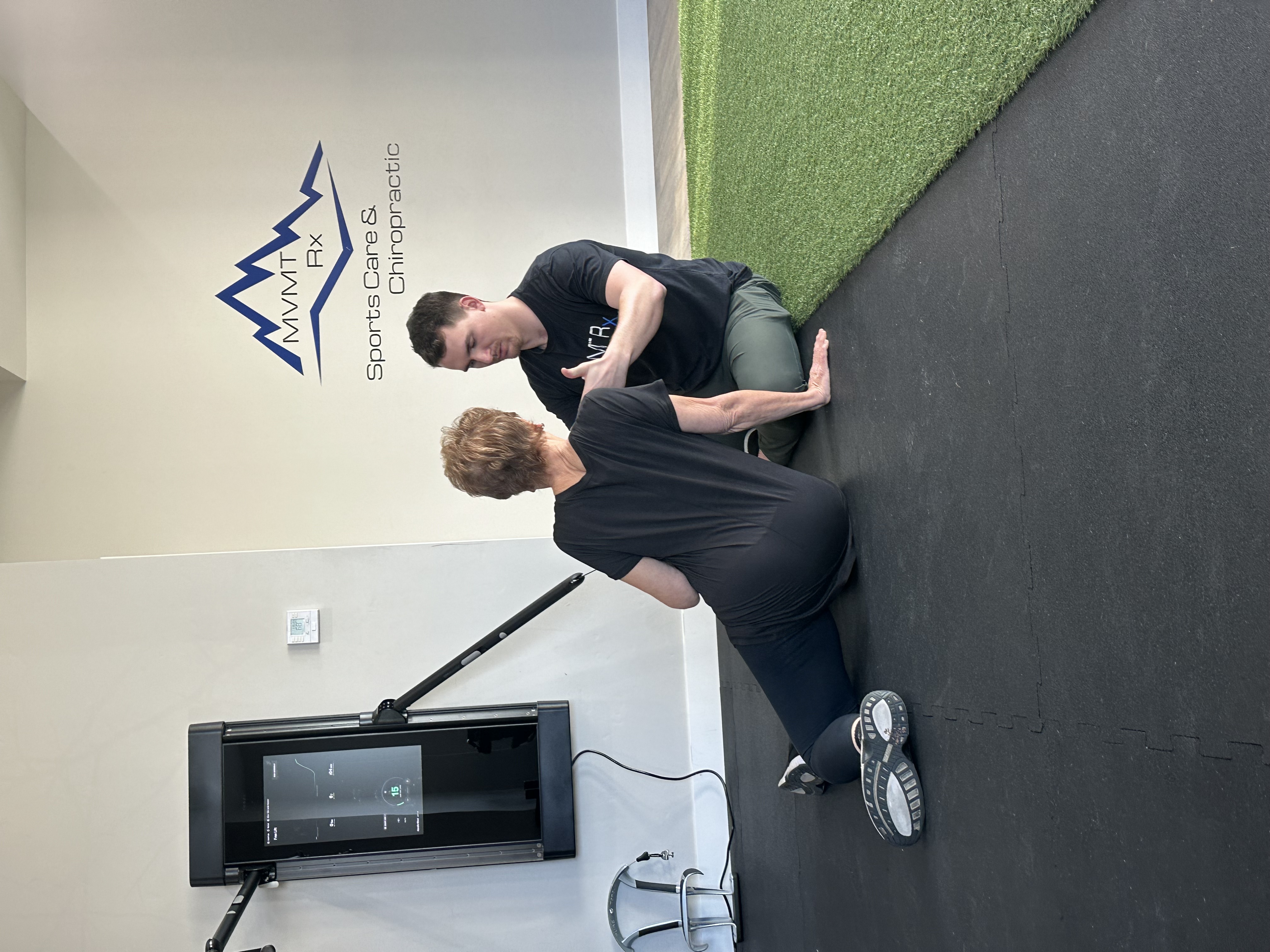
Here is what performance rehab looks like at most clinics.
You show up, do some exercises on a mat next to four other patients, get checked on for a few minutes by a therapist who is managing a full room, and leave with a photocopied sheet of exercises you have already been doing for six months.
The most common things we hear from new patients are brutal: "I only saw the actual doctor for a few minutes, then got handed off to an aide who was not even watching me." Or: "They gave me the same cookie-cutter protocol as every other patient." Or the one that really gets us: "I was doing the same exercises as the 85-year-old next to me."
At MVMT Rx, performance rehab means 60 minutes of focused, one-on-one work with your doctor. Not an aide. Not a tech. Not a rotating provider who has to re-read your chart every visit. The same doctor who assessed you, identified your root cause, and built your plan is the one working with you — every session, start to finish.
This is the part of care that most clinics skip, rush, or delegate. It is also the part that determines whether you actually get better or just feel temporarily relieved.
The Missing Piece
Why Performance Rehab — Not Just Passive Treatment — Is the Key to Lasting Results
Most people who come to us have already tried some form of care. Adjustments, massages, injections, maybe a round of physical therapy. And for most of them, the story is the same: it helped for a while, then the pain came back. The reason is almost always the same: the capacity problem was never addressed.
Think of it like this. Pain is your body's check engine light. Relief — through adjustments, soft tissue work, medication, or rest — turns that light off temporarily. But if you never fix the underlying issue, the light comes right back on. Every time.
So what is capacity? In simple terms, it is how much your body can handle before something breaks down. If your daily life requires your back to tolerate a 7 out of 10 in demand, but your back can only handle a 4, you are going to be in pain. Stretching and adjustments might temporarily bump you to a 5. But what if we built you to a 9? Now you have a buffer. A safety net. That is capacity — and it is the difference between temporary relief and lasting freedom.
Performance rehab is where we build that capacity. We take the window of reduced pain created by your treatment and use it to build real, measurable, lasting physical capability. Strength. Stability. Endurance. Confidence in your body's ability to handle what you ask of it.
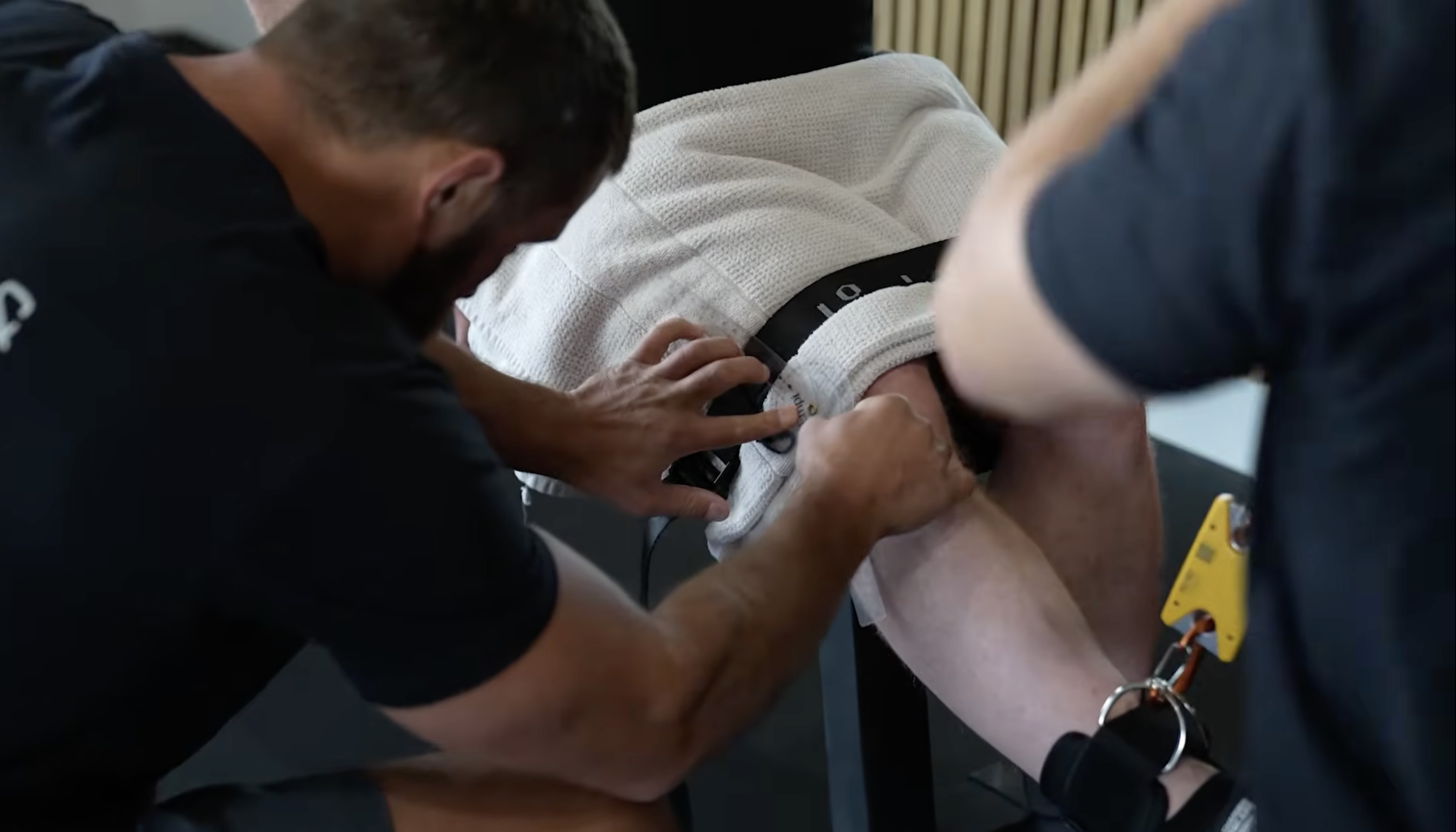
Data-Driven Care
Your Assessment Data Drives Every Decision
Before a single rehab exercise is prescribed, we run objective testing — range of motion measurements, strength testing with a dynamometer, limb symmetry comparisons, and functional movement assessments. These are real numbers that you can see, understand, and track over time.
If you want to get back to hiking, we show you where your strength and mobility currently sit versus where they need to be. If you want to avoid knee replacement surgery, we show you the specific deficits that are putting excess load on that joint and exactly how we plan to address them.
As your numbers improve, you see it — visit by visit, test by test. That is not hope. That is evidence that the plan is working.
What Is Included
What Performance Rehab Includes at MVMT Rx
Corrective Exercise
Targeted exercises designed to address the specific movement deficits and imbalances identified in your assessment. Every corrective exercise is selected because your objective testing showed a specific limitation — and we track whether it is actually improving over time. No random exercises pulled from a database. No generic sheets.
For our patients in Reno and Sparks, this often means addressing years of compensatory movement patterns that developed because no one identified the actual driver of the problem. When you correct the right thing, progress accelerates.
Dynamic Neuromuscular Stabilization (DNS)
DNS is a rehabilitation approach based on developmental kinesiology — the movement patterns your body was wired to use from infancy. It is one of the most effective methods available for restoring core stability, improving coordination between muscle groups, and building a foundation that supports everything from walking to heavy lifting.
We use DNS when patients need to rebuild foundational stability before progressing to heavier loads or more complex movements. It is especially valuable for patients who have been told they have a weak core but have never had that issue addressed with anything beyond planks and sit-ups.
Sport-Specific Mobility and Movement Training
The mobility restriction causing your pain is usually not where you feel the pain. Your low back hurts, but the real problem might be a stiff hip. Your shoulder aches, but the driver might be a restricted thoracic spine. Your knee flares up, but the root cause might be a limited ankle.
Real mobility work restores your ability to access and control the ranges of motion your body needs for the activities you care about. Whether that is the hip mobility required for a full golf swing, the shoulder range needed for overhead presses, or the ankle mobility that makes hiking downhill comfortable instead of painful — we train the specific ranges you need, not generic flexibility.
Strength Training and Progressive Loading
This is where we are world class — and it is the part most rehab programs fail to include.
Most physical therapists and chiropractors do not understand strength and conditioning principles at a high level. They were not trained in it. That takes a provider who understands both the pathology and the performance side. That is what we do.
Your body adapts to load. If you never load it progressively, you never build the resilience and robustness that prevent future injury. For our patients over 50, this is not about becoming a powerlifter. It is about being strong enough that your body has a surplus of capacity for the demands of your daily life. Stairs, hiking, travel, pickleball, yard work — all of it becomes easier and safer when you are stronger than the minimum threshold required.
Research is overwhelming and consistent: strength training is the single most impactful intervention for long-term health, injury prevention, and functional independence in adults over 50. We do not treat it as optional. We treat it as the backbone of your plan.
Return-to-Sport and Return-to-Activity Programming
If your goal is to get back to a specific sport or activity — pickleball, CrossFit, running, golf, hiking, skiing, or big game hunting — we build a structured return-to-activity program that progresses you safely from rehab back to full participation.
Too many patients get cleared for activity based on how they feel. Feeling ready and being ready are not the same thing. We use strength testing, limb symmetry comparisons, and functional movement benchmarks to make that call with data, not guesswork.
Dealing with low back pain? Download our free Low Back Pain Guide — a practical, no-nonsense resource to help you understand what is really going on and what to do about it.
Download the Free GuideWhy Patients Choose Us
What Makes Our Rehab Different from Physical Therapy Mills
One-on-one. Always.
You are never in a room with other patients sharing your therapist's attention. Every minute of your 60-minute session is spent with your doctor, focused on your plan.
Never handed off.
The doctor who designed your plan is the one delivering your rehab. No handoff to an aide, a tech, or a less experienced provider.
Progressive, not repetitive.
Your program changes as you improve. If you are doing the same exercises in month three that you did in month one, something is wrong. We progress continuously based on your response and your data.
We are always learning.
We invest heavily in continuing education and seek mentorship from world-leading experts in sports rehab, strength and conditioning, and pain science. The version of us you get on day 60 will be better than day 1.
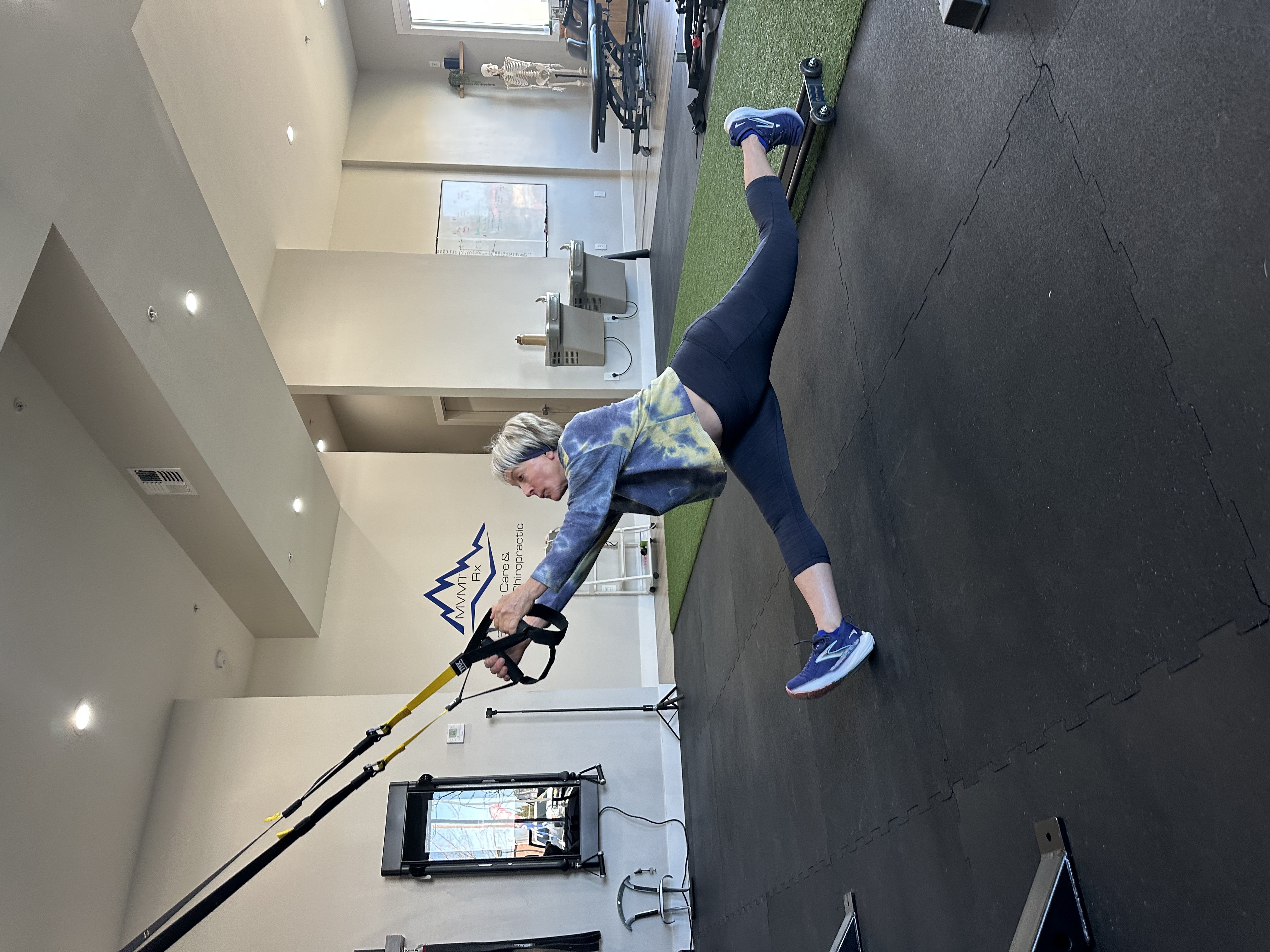
Is This Right for You
Who Performance Rehab Is For
Active adults who are done wasting time and money.
If adjustments, injections, or stretching have only provided temporary relief, the missing piece is almost certainly a capacity problem. Performance rehab is designed to solve the underlying problem so you stop cycling through treatments that do not last.
Adults over 50 who refuse to accept decline.
Many of our patients over 50 have started avoiding activities — not because they cannot do them, but because they are afraid of triggering a flare-up. Performance rehab rebuilds both physical capacity and the confidence that comes with knowing your body can handle what you ask of it.
Patients in their 60s, 70s, and beyond who want to stay strong.
Some of our most rewarding work is with older patients who want to safely get stronger, improve bone density, decrease fall risk, and improve balance through specific, tailored training. Our older patients consistently tell us they are stronger in their 70s than they were in their 50s.
Youth and high-level athletes.
We work with high school and college-level athletes in baseball, volleyball, soccer, basketball, and football — players pursuing D1 and professional careers. Our approach combines injury rehabilitation with real performance training so they do not just get healthy — they come back better.
If you have been told your goal is unrealistic or that you just have to live with it — we would love to show you a different path.
Patient Reviews
What Patients Say About Performance Rehab at MVMT Rx
Real reviews from patients in Reno and Sparks who came to get stronger, not just feel better.
I started seeing Dr. Alex at MVMT Rx about a month ago because of my right knee. I went to a physical therapist at first, which worked ok for a little bit, but I never really felt like I got an answer about why my knee was bothering me so much. When I went to MVMT Rx, they spent over an hour with me in the first visit and looked at my knee, hip, and ankle. After a few weeks I was able to run again and at the end of my time there I did the heaviest squat I have ever done.
I was way too young to give up the stuff I loved doing most. Years of injuries and wear-and-tear made it almost impossible to run the court in basketball, swing a golf club, lift weights, or even just go for a walk in the woods with my family. At only 28, I thought I was done. Then I started working with Kyle at MVMT Rx, and he totally changed everything. In less than six months, my body did a complete 180. Kyle did not just fix what was broken — he built me back up and gave me the tools to stay that way.
I am 62 years old and have lived a fit, active life. It got to the point that I could not perform a lunge or walk up and down stairs. I completely avoided hiking. Dr. Mike at MVMT Rx explained everything clearly and built a plan that made sense. I now squat, lunge, hike, and walk stairs without pain. I am currently stronger than at any time in my life.
Common Questions
Frequently Asked Questions
What is DNS (Dynamic Neuromuscular Stabilization)?
DNS is a rehabilitation approach based on developmental kinesiology — the movement patterns your body was wired to use from infancy. It is one of the most effective methods for restoring core stability, improving coordination between muscle groups, and building a foundation that supports everything from walking to heavy lifting.
Is strength training safe after 50?
Research is overwhelming and consistent: strength training is the single most impactful intervention for long-term health, injury prevention, and functional independence in adults over 50. At MVMT Rx, we safely progress patients into real strength programs while navigating around existing injuries or chronic conditions — because we understand both the pathology and the performance side.
How is this different from physical therapy?
At most PT clinics, you share your therapist's attention with multiple patients, do exercises on a mat supervised minimally, and leave with a generic exercise sheet. At MVMT Rx, every session is 60 minutes one-on-one with the doctor who designed your plan. Your program is progressive, data-driven, and never handed off to an aide or technician.
Do you work with young athletes?
Yes. We work with high school and college-level athletes in baseball, volleyball, soccer, basketball, and football — players who are going D1, looking to go D1, or pursuing professional careers. Our approach combines injury rehabilitation with real performance training so they do not just get healthy — they come back better.
Take the First Step
Ready to Stop Managing Symptoms and Start Building Real Capacity?
Book a free Discovery Call. We will talk about what is going on, what you have tried, and whether performance rehab at MVMT Rx is the right next step.
Book Your Free Discovery Call


Free Guides
Patient Care
Links
© Copyright 2026. MVMT Rx Sports Care & Chiropractic. All Rights Reserved.