
Chiropractic Adjustments & Neck Pain
Neck Pain After Failed Chiropractic Care: What's Actually Going On
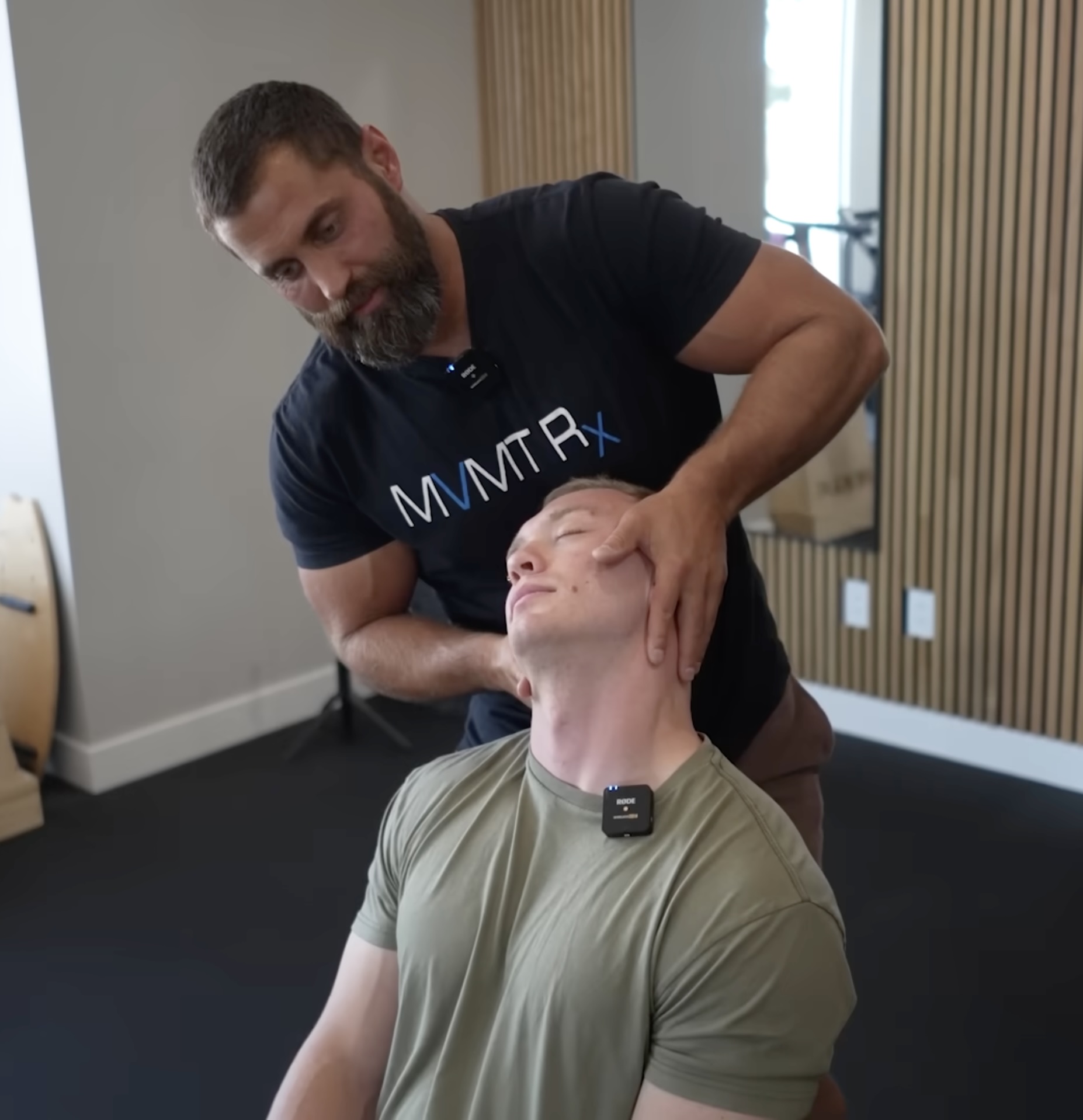
You have been adjusted dozens of times. The relief lasts a day or two, and then the stiffness, the headaches, and the tension creep right back. Here is why — and what a different approach changes.
The Pattern
Why Your Neck Keeps Locking Up No Matter How Many Times You Get Adjusted
You know the cycle. The neck gets stiff. The headaches start creeping in. You go in for an adjustment — and for a day, maybe two, things feel better. The tension releases. The range of motion comes back. You think, okay, we are making progress.
Then it tightens right back up. And you are back in the office next week, getting the same segments adjusted, hearing the same pops, feeling the same temporary window of relief — and wondering why nothing is actually changing.
If this has been your experience for months or years, the adjustment is not the problem. Chiropractic adjustments are a powerful clinical tool for the cervical spine. They restore segmental motion, reduce pain signaling, and create an immediate neurological window where the body can move better. We use them constantly at MVMT Rx. We believe in them deeply.
But here is what most chiropractic care gets wrong: the adjustment opens a window. It does not build anything inside that window. If the muscles, tendons, and stabilizers around the cervical spine do not have the strength, endurance, and coordination to maintain the motion the adjustment just restored, the body defaults back to its old patterns. The stiffness returns. The headaches return. And you need another adjustment — not because the adjustment failed, but because nothing was done to make the change last.
This is the gap between relief and resolution. And it is where the vast majority of neck pain patients live — cycling through care that feels good in the moment but never produces a durable outcome.
And here is what makes it worse: the neck is often taking the blame for problems that live somewhere else entirely. A thoracic spine and ribcage that are stiff and locked down force the cervical spine to compensate for motion it cannot borrow from below. Weak, deconditioned shoulders that cannot stabilize under load make the neck work overtime — the upper traps, levator, and suboccipital muscles stay chronically tense because they are picking up the slack for a shoulder girdle that is not doing its job. Over time, this constant overwork does not just cause neck pain. It causes the jaw to progressively tighten as well. The muscles of mastication — the jaw clenchers — start guarding in response to the cervical tension, and before long you are dealing with TMJ pain, jaw clicking, grinding, and headaches that wrap from the base of your skull all the way to your temples. Now the neck pain is feeding the jaw tension, the jaw tension is feeding the headaches, and the headaches are feeding the neck pain. It becomes a self-reinforcing cycle that no amount of adjustments, massage, or muscle relaxers will break — because nobody has addressed the thoracic spine, the ribcage, or the shoulder weakness driving the whole thing.
Signs your neck pain care is stuck in a relief cycle: you have been getting adjusted regularly for months or years and still need adjustments to feel normal, the relief from each visit lasts less than a week, you experience recurring headaches and tension that only respond temporarily to manual therapy, your provider has not assessed or addressed cervical strength or endurance, you have never been given a progressive loading program for your neck, you have developed jaw tension, TMJ pain, or teeth grinding that coincides with your neck issues, and you have been told "you just need maintenance" without anyone explaining why the problem has not resolved.
What the Evidence Says
Your MRI Does Not Tell the Whole Story — And Neither Does Your Adjustment
If you have had imaging done on your cervical spine — an MRI or X-ray — and been told you have disc degeneration, disc bulges, or "wear and tear," here is the first thing to understand: those findings are incredibly common in people with zero neck pain. A 2015 systematic review in the American Journal of Neuroradiology found that disc degeneration is present in 37% of 20-year-olds and 96% of 80-year-olds with no symptoms at all. Disc bulges follow a similar trajectory — present in 30% of asymptomatic 20-year-olds and 84% of asymptomatic 80-year-olds.[1]
This does not mean imaging findings are irrelevant. It means that what you see on an MRI does not reliably predict how much pain you should have, how much function you should have, or what you are capable of. The disc bulge or degeneration may be there. But so might the real driver — a capacity deficit, a motor control problem, a cervical stabilizer that has been weak for years, or a thoracic spine that is not doing its job.
The second thing to understand: the research is clear that combining manual therapy with progressive exercise produces better outcomes for chronic neck pain than either approach alone. A 2010 systematic review found that the combination of manual therapy and exercise is more effective than manual therapy or exercise in isolation — and that adherence to the exercise program is a critical factor in long-term results.[2] A more recent 2023 systematic review with meta-analysis in Cureus found that McKenzie-based (MDT) assessment and treatment is effective for adults with moderate-to-severe neck pain, producing clinically significant improvements in both pain and disability scores.[3]
There is also a pattern we see constantly that almost never gets diagnosed correctly: cervical disc issues that refer pain into the middle back, between the shoulder blades, or around the posterior ribs. The patient — and often the provider — assumes it is a rhomboid problem, a middle trapezius strain, or a rib that is "out of place." They get adjusted. They get massage. They get dry needled between the shoulder blades. And nothing changes — because the pain is not coming from the middle back at all. It is referred pain from the lower cervical spine. The disc or nerve root at C5, C6, or C7 is irritated, and the brain is interpreting that signal as pain between the shoulder blades. Until someone performs an in-depth evaluation that includes cervical provocation testing, neurodynamic assessment, and McKenzie-based directional loading, the actual source never gets identified. We use our evaluation process to find the root of the issue, determine a sensible starting point to calm the nerve down, and then address the system holistically — so the patient gets a long-term solution instead of years of chasing a symptom in the wrong location.
The stat most providers never tell you: an estimated 99% of persistent pain between the shoulder blades is not actually a rhomboid problem, a middle trap issue, or a rib "out of place." It is referred pain from the cervical spine — typically from a disc or nerve root at C5, C6, or C7. If you have been getting massage, dry needling, or adjustments between your shoulder blades for months or years and the relief never lasts more than a few days, the problem is almost certainly in your neck. That is not a guess — it is one of the most well-established referral patterns in musculoskeletal medicine, and it is missed constantly because providers treat where it hurts instead of evaluating where it starts.
And for patients dealing with cervical radiculopathy — nerve-related pain, numbness, or tingling radiating into the arm or hand — the evidence strongly supports conservative care as a first-line approach. A large epidemiological study found that 75% of cervical radiculopathy patients improve with conservative treatment alone, and at six-year follow-up, there was no clear evidence that surgery provided better long-term outcomes than nonoperative management.[4] When conservative care includes manual therapy, cervical traction, and deep neck flexor strengthening, the probability of a successful outcome reaches 85-90%.[5]
Despite this evidence, patients with cervical radiculopathy are still routinely fast-tracked into surgery or cycled through recurrent cortisone injections with no plan for building capacity around the affected nerve. The injections may reduce inflammation temporarily, but they do not address why the nerve became irritated in the first place — and the relief fades because nothing underneath has changed. Even patients with significant neurological deficits — measurable weakness, sensory changes, reflex changes — can be rehabilitated with the right approach. It requires a methodical, intentional, and progressive plan that adapts with the patient as they improve — starting with calming the nerve and restoring basic tolerance, then systematically rebuilding strength, endurance, and confidence through each phase. This is not guesswork. It is clinical reasoning applied step by step, with objective testing guiding every decision along the way.
The data is not ambiguous. Adjustments plus progressive rehabilitation — not adjustments alone — is the evidence-based standard for chronic neck pain. The question is whether your current provider is delivering both.
Why adjustments alone fail for chronic neck pain: they restore motion without building the capacity to maintain it, they do not address deep cervical flexor weakness — one of the most consistent findings in chronic neck pain patients, they do not retrain motor control or coordination under load, they do not assess or treat nerve sliding dysfunctions in the cervical spine, they do not build the thoracic extension and scapular stability that take pressure off the neck, and they keep you dependent on external care instead of building internal resilience.
Patient Story
Greg Avoided Surgery — And Got His Neck Back
Local business owner Greg Golden — owner of Bizarre Guitar and Bizarre Guns, and founder of The Greg Golden Band — came to MVMT Rx as a last resort. He had tried chiropractic with zero relief and wanted to avoid surgery and injections at all costs. We started with pain relief through adjustments, then built a progressive exercise plan for his neck that gave him complete resolution. He also had a full-thickness rotator cuff tear that we rehabbed without surgery or injections.
Looking Deeper
Your Neck Pain Is Rarely Just a Neck Problem
The cervical spine is the most mobile region of the entire spinal column — and like the shoulder, that mobility comes at a cost. The neck relies heavily on the surrounding musculature to maintain stability while allowing the range of motion you need for daily life. When any part of that system breaks down, the cervical spine compensates. And compensation under repetitive load — turning your head in traffic, sitting at a desk for eight hours, sleeping in a position that loads the neck — is how chronic pain takes hold.
At MVMT Rx, we do not just adjust the stiff segments and send you home. We assess the entire system that supports the cervical spine — because the driver is often somewhere else entirely.
A thoracic spine that does not extend or rotate well forces the cervical spine to do more work in every direction — looking up, turning your head, working overhead. Weak or inhibited deep cervical flexors — the small stabilizing muscles at the front of the neck — are one of the most consistent and well-documented findings in chronic neck pain patients, yet they are almost never assessed or trained in standard chiropractic or PT care. Scapular stability deficits change the mechanical relationship between the shoulder girdle and the neck, creating chronic tension in the upper trapezius, levator scapulae, and suboccipital muscles that no amount of massage or adjusting will permanently resolve.
This is where our training in McKenzie-based assessment (MDT) and clinical neurodynamics becomes a major differentiator. McKenzie assessment identifies directional preferences in how your cervical spine responds to specific movements — which directions centralize your symptoms and which ones make them worse. This is critical diagnostic information that most providers never gather. Beyond assessment, McKenzie-based loading acts as a mechanical pump for the cervical discs and surrounding tissues — driving congestion and waste products out while allowing fresh blood supply and nutrients back in. It improves the health of the localized tissue, restores mobility, and creates an environment where healing can actually occur.
Clinical neurodynamics takes it further. The nerves exiting your cervical spine travel through narrow passages and then slide through muscles, fascia, and connective tissue all the way down into your arms and hands. When those nerves lose their ability to slide freely — due to inflammation, fibrosis, compression, or prolonged postural stress — the result can be pain, stiffness, headaches, and radiating symptoms that mimic everything from shoulder problems to carpal tunnel. Our proficiency in clinical neurodynamics allows us to assess exactly where a nerve sliding dysfunction is occurring and address it at the source — not just at the symptom.
And our training in Dynamic Neuromuscular Stabilization (DNS) addresses the foundation underneath all of it. DNS restores proper intra-abdominal pressure and the correct orientation of the ribcage relative to the pelvis — which decompresses the thoracic and lumbar spine from below, freeing the cervical spine from compensatory overwork. When the trunk stabilizes properly, the neck does not have to do the job of the core. The tension drops. The headaches resolve. And the adjustments hold — because the system underneath is finally doing its part.
Common root cause drivers of chronic neck pain and headaches: deep cervical flexor weakness and inhibition, thoracic spine extension and rotation restrictions, scapular stability deficits creating chronic upper trap and levator tension, cervical nerve sliding dysfunctions contributing to pain and radiating symptoms, ribcage stiffness limiting thoracic mobility and forcing cervical compensation, poor lumbopelvic control and core stability deficits, postural endurance deficits from prolonged desk and screen time, motor control and coordination deficits under load, jaw tension and TMJ dysfunction driven by chronic cervical overwork, cervical disc referral patterns misdiagnosed as rhomboid or mid-back pain, deconditioning from prolonged avoidance of cervical loading, and loss of confidence in neck movement that creates guarding and compensatory patterns.
We use objective measurements — dynamometer testing for cervical and scapular strength, range of motion assessment, deep cervical flexor endurance testing, and functional movement analysis under load — to quantify exactly where the deficits are. We calculate side-to-side symmetry and compare your results to normative data derived from hundreds of thousands of pain-free active adults, using torque values that account for your body weight and limb length. That data drives the plan. Not a protocol. Not a guess. Not an X-ray.
A Different Approach
How We Fix Neck Pain That Nothing Else Has Fixed
At MVMT Rx, we use a clinical reasoning framework called the RAIL System that guides every decision we make — from your first visit through long-term resolution. For neck pain, this framework is what separates a care plan that keeps you coming back for adjustments from one that actually resolves the problem.
Relief — The first priority is to calm the cervical spine down and restore motion. Chiropractic adjustments — including Y-strap decompression when clinically appropriate — restore segmental mobility and reduce pain signaling. Class IV laser manages inflammation at the tissue level. Myofascial release targets the upper trapezius, suboccipital muscles, levator scapulae, and deep cervical extensors. McKenzie-based directional loading begins immediately — pumping the cervical discs and creating the mechanical environment for tissue healing. And because everything happens under one roof, the adjustment and the first round of loading happen in the same session — we create the window and immediately use it.
Adaptation — Once the acute irritation is managed, we begin rebuilding the capacity that was missing. Deep cervical flexor activation and endurance training — the muscles most consistently weak in chronic neck pain patients. Scapular stabilizer strengthening to take chronic tension off the upper traps and levator. Thoracic spine mobility work to redistribute motion away from the cervical spine. Cervical nerve gliding and neurodynamic techniques to restore healthy nerve sliding. Every exercise is dosed based on objective testing and progressed based on measurable improvement — not time or insurance authorization.
Integration — This is where we start challenging the cervical spine and upper body with complex multi-joint exercises — loaded carries, overhead pressing, pulling movements, rotational work. We reintroduce demands that your neck needs to handle in real life — looking over your shoulder in traffic, working overhead, holding sustained positions at a desk, sleeping without waking up in pain. We add reactive and plyometric upper body progressions when applicable — teaching the cervical spine and shoulder girdle to absorb and produce force confidently. By the end of this phase, we are not just managing your neck. We are building an upper body that supports it.
Lifespan — You graduate with the strength, the capacity, and the skillset to manage your neck long-term. You understand what your body needs, you know how to train it, and you have the confidence to push yourself without fear of the stiffness and headaches returning — whether you are working at a desk for ten hours, traveling, training hard, or just living your life without constantly thinking about your neck.
Adjustments are Phase 1 — not the entire plan.
What This Looks Like
What a Neck Pain Plan Actually Looks Like at MVMT Rx
Every patient is different, but here is the general shape of how we approach persistent neck pain — the kind that has not responded to regular adjustments, massage, muscle relaxers, or the "just stretch more" advice you have been following for too long.
Discovery Visit: A 60-minute, in-person assessment where we walk through your full history — including every provider you have seen, every treatment you have tried, and every activity you have modified or given up because of your neck. We perform a functional evaluation of the entire cervical and upper body chain — not just the stiff segments — and give you a clear picture of what is actually driving your pain. We assess cervical strength and endurance, deep cervical flexor function, thoracic mobility, scapular stability, nerve mobility, and how your body moves under load. This is a root cause assessment, not a sales pitch. The goal is mutual confidence that you are in the right place and we can help.
Evaluation and First Treatment: If we both agree it is the right fit, we complete the clinical picture with additional assessment, then turn everything into a structured treatment session so you can experience firsthand what a high-intention, 60-minute session looks like — adjustments, manual therapy, targeted loading, and clinical coaching in the same visit. From there, we make a clinical recommendation on a plan of care — including time, frequency, and investment — decided together.
Ongoing Care: Every session is 60 minutes, one-on-one with your doctor. Your plan adapts weekly based on how your body responds. Adjustments are used strategically — not on autopilot — and paired with progressive rehabilitation that builds real capacity between visits. You receive programming to follow at home, at the gym, or on the road. You are coached, progressed, and held accountable through every phase of recovery. And you develop the movement literacy and body awareness to confidently manage your own neck for life — not depend on someone else to keep it feeling decent.
What a neck pain plan at MVMT Rx may include: chiropractic adjustments and Y-strap decompression, McKenzie-based directional loading for cervical disc health, clinical neurodynamic techniques for nerve mobility, DNS-based core and trunk stabilization, deep cervical flexor activation and endurance training, scapular stabilizer strengthening, thoracic spine mobility and extension training, progressive upper body loading and integration, postural endurance training for desk and screen demands, objective retesting to track measurable progress, and ongoing plan adaptation based on your response.
Learn More: Chiropractic Adjustments at MVMT Rx →
How we use spinal and extremity adjustments — including Y-strap decompression — as part of the RAIL System in Reno and Sparks, NV.
Read the Full Guide: Why a Multi-Modal Approach Works →
Our complete breakdown of the RAIL System, our clinical toolkit, and why single-modality care fails for chronic pain.
Related: Why Your Low Back Pain Keeps Coming Back After Every Adjustment →
The same adjustment-plus-rehab approach applied to chronic low back pain — DNS, McKenzie, and progressive loading.
Related: Why Your Shoulder Isn't Getting Better →
Research shows 50% of shoulder pain cases have a cervical spine component. If your shoulder and neck both bother you, this is worth reading.
Related: Knee Osteoarthritis — Why Generic Exercise Programs Fail →
Why your X-ray does not define your ceiling, and how objective testing and progressive loading change the outcome for knee OA.
Related: Why Your Plantar Fasciitis Won't Go Away (And What Actually Works) →
Focused shockwave therapy, progressive loading, and clinical neurodynamics — why the stretch-ice-rest cycle fails for chronic heel pain.
Frequently Asked Questions
Neck Pain Questions We Hear Every Week
I have been getting adjusted for years. Should I stop?
No — adjustments are a legitimate and valuable tool. The issue is not the adjustment itself. The issue is when adjustments are the only tool being used. If you have been getting adjusted regularly for months or years and still need adjustments to feel normal, the missing piece is almost always progressive rehabilitation — building the strength, endurance, and motor control to maintain what the adjustment gives you. At MVMT Rx, we use adjustments as Phase 1, then build capacity on top of them so the results last.
My MRI shows disc degeneration and bulging discs. Does that mean I am stuck with this pain?
No. Disc degeneration and disc bulges are present in a significant percentage of people with absolutely no pain — and the prevalence increases with age regardless of symptoms. What you see on imaging does not determine how much pain you should have or what your ceiling is. The real drivers of persistent neck pain are usually capacity deficits — weak deep cervical flexors, thoracic stiffness, nerve sliding dysfunctions, and scapular instability — that do not show up on imaging but respond very well to targeted rehabilitation.
I have pain between my shoulder blades that will not go away. Could that be coming from my neck?
Yes — and this is one of the most commonly missed diagnoses we see. Pain between the shoulder blades, around the rhomboids, or near the posterior ribs is frequently referred pain from the lower cervical spine — typically from a disc or nerve root issue at C5, C6, or C7. Patients and providers often assume it is a muscular problem and treat it with massage, adjustments to the mid-back, or dry needling between the shoulder blades. When none of that works, it is usually because the source is in the neck, not the mid-back. Our evaluation includes cervical provocation testing, neurodynamic assessment, and McKenzie-based directional loading to identify whether the cervical spine is the actual driver.
Can neck problems cause headaches?
Absolutely. Cervicogenic headaches — headaches driven by dysfunction in the cervical spine — are one of the most common and most underdiagnosed types of headaches. They often present as tension at the base of the skull, behind the eyes, or wrapping from the back of the head to the forehead. When the cervical spine lacks mobility, the deep stabilizers are weak, or nerves in the upper cervical region are irritated, headaches become a recurring pattern. We see this constantly, and it responds very well to a combination of cervical adjustments, deep cervical flexor training, nerve mobilization, and thoracic mobility work.
I have numbness and tingling going down my arm. Is that coming from my neck?
Very likely. Numbness, tingling, or radiating pain into the shoulder, arm, or hand is often caused by cervical radiculopathy — irritation or compression of a nerve root in the cervical spine. The good news is that research shows 75% of cervical radiculopathy patients improve with conservative care alone, and there is no clear evidence that surgery provides better long-term outcomes. Our proficiency in clinical neurodynamics allows us to assess exactly where the nerve dysfunction is occurring and treat it at the source — restoring nerve sliding, reducing irritation, and building capacity around the affected area.
Can neck problems cause jaw pain or TMJ issues?
Absolutely. When the cervical spine is chronically stiff and the muscles around the neck are overworking — especially the upper traps, suboccipitals, and deep cervical extensors — the jaw muscles progressively tighten in response. Over time, this leads to TMJ pain, jaw clicking, teeth grinding, and tension headaches that wrap from the base of the skull to the temples. The neck tension feeds the jaw tension, the jaw tension feeds the headaches, and the headaches feed the neck pain. Addressing the cervical spine, thoracic mobility, and shoulder girdle strength often resolves the jaw and TMJ symptoms without ever directly treating the jaw itself.
What is different about MVMT Rx compared to my current chiropractor or PT?
Three things. First, every session is 60 minutes, one-on-one with your doctor — you are never handed off to an aide or technician. Second, we combine chiropractic adjustments with progressive rehabilitation, McKenzie-based cervical assessment, clinical neurodynamics, DNS, laser, and myofascial release under one roof — in the same session. Third, we use objective testing and a clinical reasoning model called the RAIL System to guide every decision — not generic protocols, not arbitrary visit counts, and not insurance authorization timelines.
What is the Y-strap and do you use it for neck pain?
The Y-strap is a specific axial traction technique that creates a long-axis distraction force to rapidly decompress the cervical spine. It can provide significant relief for neck pain, stiffness, headaches, and upper back tension. MVMT Rx is one of the only chiropractic offices in Nevada that regularly performs the Y-strap — and we only use it when clinically appropriate, never as a gimmick. It is one tool in a comprehensive plan, not a standalone treatment.
Conditions and symptoms we treat at MVMT Rx related to the cervical spine: chronic neck pain, cervicogenic headaches, tension headaches from neck dysfunction, cervical radiculopathy, disc bulge and disc herniation in the cervical spine, neck stiffness and reduced range of motion, numbness and tingling in the arm or hand, upper trap and levator scapulae tension, suboccipital tightness and pain, neck pain after failed chiropractic care, neck pain after failed physical therapy, whiplash recovery, tech neck and postural neck pain, neck pain with radiating shoulder symptoms, chronic neck pain that keeps coming back after adjustments, TMJ pain and jaw tension related to cervical dysfunction, pain between the shoulder blades referred from the cervical spine, rhomboid pain caused by cervical disc issues, cervical radiculopathy rehabilitation without surgery or injections, and neck pain with thoracic spine and ribcage stiffness.
References
- Brinjikji W, Luetmer PH, Comstock B, et al. Systematic literature review of imaging features of spinal degeneration in asymptomatic populations. American Journal of Neuroradiology. 2015;36(4):811–816. doi:10.3174/ajnr.A4173
- Gross A, Miller J, D'Sylva J, et al. Manipulation or mobilisation for neck pain: a Cochrane Review. Manual Therapy. 2010;15(4):315–333. doi:10.1016/j.math.2010.04.002
- Nikolaidis PT, et al. The McKenzie Method is an effective rehabilitation paradigm for treating adults with moderate-to-severe neck pain: a systematic review with meta-analysis. Cureus. 2023;15(6):e40117. doi:10.7759/cureus.40117
- Huo L, Yang X, Feng T, et al. Management of cervical spondylotic radiculopathy: a systematic review. Global Spine Journal. 2022;12(8):1788–1802. doi:10.1177/21925682221075290
- Radhakrishnan K, Litchy WJ, O'Fallon WM, et al. Epidemiology of cervical radiculopathy: a population-based study from Rochester, Minnesota. Brain. 1994;117(2):325–335. doi:10.1093/brain/117.2.325
Done Living Around Your Neck Pain?
If adjustments, massage, and muscle relaxers have not fixed your neck — the problem is not your commitment. It is the approach. Start with a free conversation.
Book Your Free Discovery CallMVMT Rx Sports Care & Chiropractic | Reno & Sparks, NV | (775) 245-4142



Free Guides
Patient Care
Links
© Copyright 2026. MVMT Rx Sports Care & Chiropractic. All Rights Reserved.