
Gluteal Tendinopathy & Lateral Hip Pain
Lateral Hip Pain in Women 40–60+: Why Piriformis Stretches and Cortisone Injections Aren't Fixing It
If you're a woman in your 40s, 50s, or 60s with a nagging pain on the outside of your hip and thigh that won't go away — there's a good chance you've been misdiagnosed. Here's what's really going on, why the standard treatments fail, and what actually works.
Read This First
If You've Had a Cortisone Injection for This, Start Here
The single most important thing to know upfront: a corticosteroid (cortisone) injection into a tendon problem can make your long-term outcome worse, not better.
If you've already had one, or you're being told you need one, we'll cover the details further down — but here's the short version now, because it matters:
- The largest and best-designed study on this condition — the LEAP trial — compared cortisone injection versus structured exercise plus education versus a "wait and see" approach. At one year, the exercise group had roughly 80% success, while the cortisone group did no better than doing nothing at all.
- A systematic review (Dean et al., 2014) found corticosteroid injections have significant negative effects on tendon tissue — reduced cell viability, disorganized collagen, and weaker mechanical properties.
- Clinicians who see hundreds of these cases report a pattern of diminishing returns — each subsequent injection tends to work less well than the last.
Cortisone can feel like relief for a few weeks. But the tissue you're trying to rebuild is the same tissue the injection weakens. That's a bad trade in a condition that responds to loading. If you've had one and things aren't better, this is likely why. If you're being told you need another, this is worth reading before you decide.
The bottom line on cortisone for lateral hip pain: short-term relief that fades, at the cost of a tendon that heals slower afterward. In the one condition where progressive loading is the proven fix, an injection that weakens the tendon is working against you.
The Real Diagnosis
First — Who Gets This
The condition is called gluteal tendinopathy (some clinicians call it "greater trochanteric pain syndrome," which is a fancy way of saying "pain on the outer hip"). You've probably never heard of it. Neither has almost anyone you know. But you're in the exact population that gets it constantly:
- Nearly 1 in 4 women aged 50–79 have this condition. It's about three times more common in women than in men.
- It's the most common tendon problem people see their doctor for in the entire lower body.
- The impact on quality of life — pain, sleep disruption, activity limits — is on par with end-stage hip arthritis. This is not "a little tightness."
- It gets misdiagnosed as a low back problem in a large share of cases — sometimes to the point where patients get lumbar spine surgery for what's actually a hip tendon issue.
Peri- and post-menopausal women are hit hardest, for reasons that make sense once you see them: hormonal changes affect tendon quality, body composition shifts, and this life stage tends to bring more sitting, more single-leg-loaded activities like walking the dog or getting in and out of the car, and sometimes a sudden decision to "get in shape" — a new walking program, hiking on vacation, stairs at a new house. Any of those can flip a tendon that was quietly declining into one that's screaming.
Who we see with lateral hip pain at MVMT Rx: women 40–60+ with pain on the outside of the hip, peri- and post-menopausal women who took up walking or hiking, patients told they have "hip bursitis" that keeps coming back, women misdiagnosed with piriformis syndrome or sciatica, active moms and grandmothers with outer-hip and outer-thigh pain, women whose "low back pain" is actually coming from the hip, and patients who've had one or more cortisone injections that stopped working.
Much of the research foundation for this article draws on the work of Dr. Alison Grimaldi, PhD physiotherapist and the internationally recognized authority on this condition. She spent her career mapping out the diagnosis and treatment framework that we — as sports and performance chiropractors at MVMT Rx — apply with our patients here in Reno and Sparks.
Is This You?
What Gluteal Tendinopathy Actually Feels Like
The most identifying feature is pain and tenderness right over the bony bump on the outside of your hip (the greater trochanter). Pain often extends down the outer thigh, sometimes to just above the knee — but rarely past the knee.
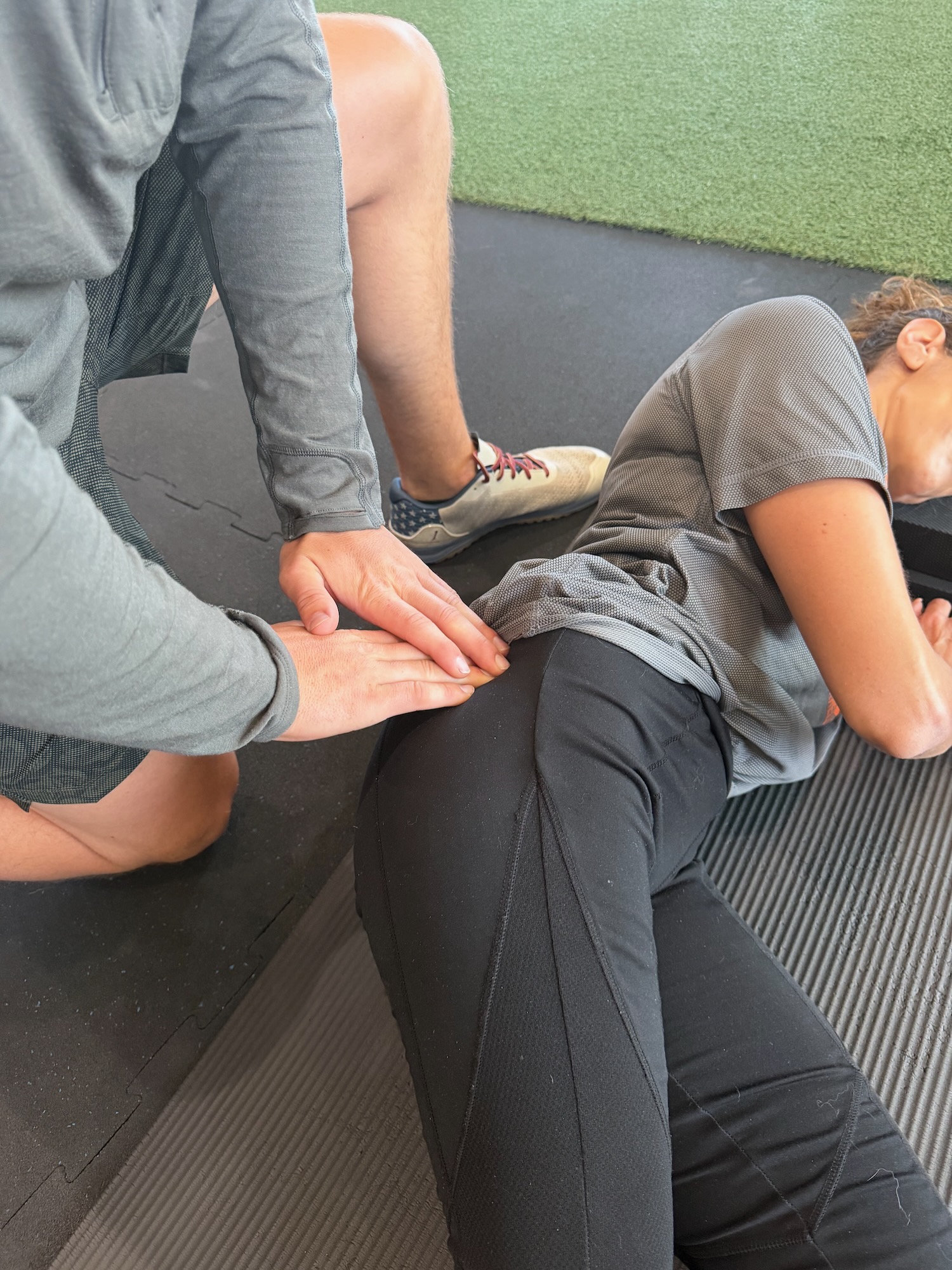
Gluteal tendinopathy is tender over one specific bony point — the greater trochanter. That location is a big part of the diagnosis.
Gluteal tendinopathy is tender over the outer hip bone and the tendon just above it — not deep in the middle of the buttock. If pressing the bony point on the side of your hip reproduces your pain, that's a very different problem from the one you were probably told you had.
Here's the pattern that's almost impossible to fake — if a lot of this sounds like your daily life, you're very likely dealing with gluteal tendinopathy, not piriformis, not "bursitis," and not aging:
- Worst at night. Lying on the painful side presses the tendon directly into the mattress. Rolling to the other side is often no better — now the painful hip is on top, and that leg drops across your body and compresses the tendon from above. That's why so many women end up with no comfortable side to sleep on.
- Getting up after sitting for a while — the first few steps are stiff and painful.
- Stairs, especially going up. Going down can feel like the knee might "give way" (it won't — that's a pain reflex, not instability).
- Standing on one leg to put pants on or step into a car.
- Long walks or hills, especially uphill or on a treadmill incline.
- Sitting cross-legged or in low, deep chairs.
Misdiagnosis
Why the Labels You've Been Given Are Usually Wrong
"You have bursitis." (And why cortisone made it worse.)
For decades, lateral hip pain was called "trochanteric bursitis." Modern imaging has shown this label to be wrong most of the time. Studies scanning people with lateral hip pain find bursa inflammation in only about 8–20% of cases. In the other 80%-plus, the bursa isn't the problem — the tendon is.
The "bursitis" label matters because it leads straight to anti-inflammatory treatments: rest, ice, anti-inflammatory meds, and — most importantly — cortisone injections. None of those address the actual tendon problem. That's why the injection feels great for a couple weeks and then the pain comes back. Here's the deeper problem with cortisone:
- Cortisone weakens tendon tissue. Dean et al. (2014) found corticosteroid injections cause reduced tendon cell viability, disorganized collagen, and lower mechanical strength.
- In the LEAP trial at one year: the cortisone group had about 58% success — statistically no better than the wait-and-see group's 52%. The exercise-plus-education group had 80%. The injection's early relief faded while the tissue effects likely persisted.
- In related tendon conditions (like tennis elbow, which is well studied), even proper physical therapy after a cortisone injection can't fully overcome the delay in recovery the injection created.
- Diminishing returns. Clinicians who see this constantly report that each subsequent injection tends to help less than the one before.
Cortisone isn't evil in every situation. But as a first-line treatment for a tendon problem — especially one likely to recur — it's a bad trade.
"You have piriformis syndrome."
This label gets slapped on almost any pain in the lateral hip or buttock. True piriformis syndrome — where the piriformis muscle actually pinches the sciatic nerve — is rare, and it doesn't cause pain right over the outer hip bone. Here's the bigger problem: the standard "fix" is to stretch the piriformis, and most piriformis stretches involve pulling your knee across your body — hip adduction.
Hip adduction is the exact position that compresses the gluteal tendons against the bone underneath and makes tendinopathy worse. Research measuring the squeeze on these tendons in different hip positions found:
- Hip neutral: about 4 units of compression.
- Hip pulled 10° across the body: about 36 units (9× more).
- Hip pulled 40° across the body: about 106 units (26× more).
Every time you pull your leg across your body to "stretch it out," you're wringing the painful tendon over the bone underneath. It's the mechanical opposite of what the tendon needs.
"It's just aging. Learn to live with it."
The most damaging label of all. This condition responds beautifully to the right kind of loading. "It's just aging" is almost always code for "no one bothered to figure out what's actually going on."
Right Diagnosis, Still Stuck
What If You Got the Right Diagnosis and You're Still Not Better?
This happens all the time. You looked up your symptoms, decided it was probably gluteal tendinopathy, saw a provider who agreed — and you're still stuck. A few common reasons:
- The exercises weren't the right dose. Tendons need progressive loading. Too little never rebuilds them; too much flares them. "Here's a resistance band, do 10 clams a day" doesn't move the needle — and sidelying clams may actually be making it worse, because the position compresses the tendon.
- The daily compressive triggers weren't addressed. All the exercise in the world won't overcome standing hanging on one hip all day, sitting cross-legged, or side-sleeping without a pillow between your knees.
- You were told to stretch. Stretching a gluteal tendon almost always makes it worse.
- The whole plan was passive. Dry needling, massage, cupping, scraping, ultrasound — these can turn the volume down on symptoms for a few days. None of them build tendon capacity. A needle doesn't make a tendon tolerate more load; load does. If needling was the plan rather than a small part of it, you were always going to end up back where you started.
- You had cortisone somewhere in the timeline. The injection may have delayed your tissue's ability to respond to loading, even if the rehab afterward was correct.
- The plan wasn't personalized. Two women with the same diagnosis can need very different programs.
- The plan was too short. Tendons remodel over months, not weeks.
The right diagnosis is only half of it. Correct execution is the other half — and this is where the difference between a clinic that specializes in this condition and one that doesn't becomes obvious.
Two Self-Tests
Two Quick Tests You Can Do Today
Test 1 — Single-Leg Stance
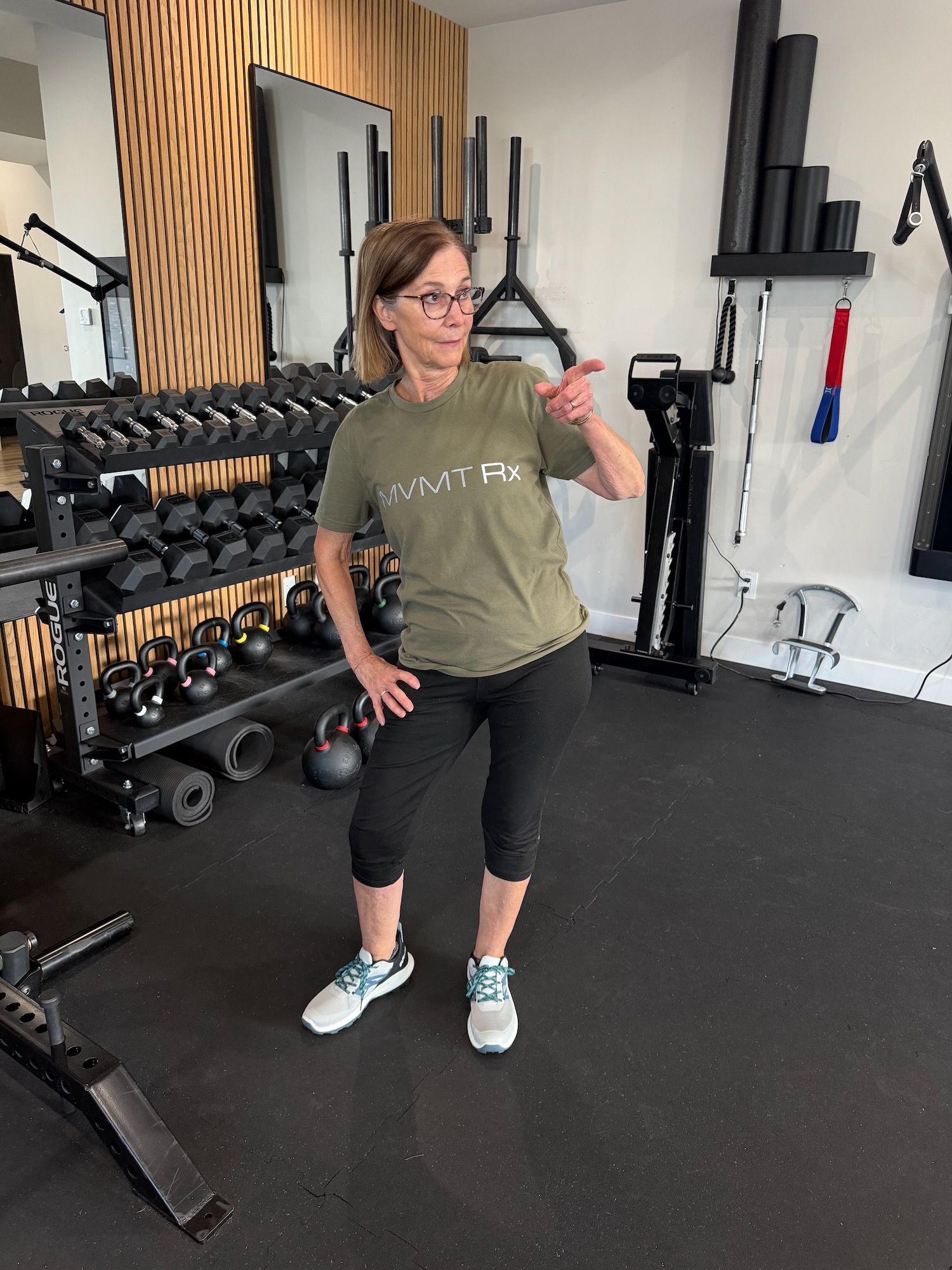
Stand on your painful leg. Use a fingertip on a wall or counter for balance — you're not testing balance, you're testing tolerance. Hold up to 30 seconds and see whether pain reproduces over the outer hip.
Pain within seconds: strong signal. Pain between 5 and 30 seconds: positive. Pain-free at 30 seconds: this test doesn't rule it out — it's very good at confirming the condition and much weaker at excluding it. Keep reading and try Test 2.
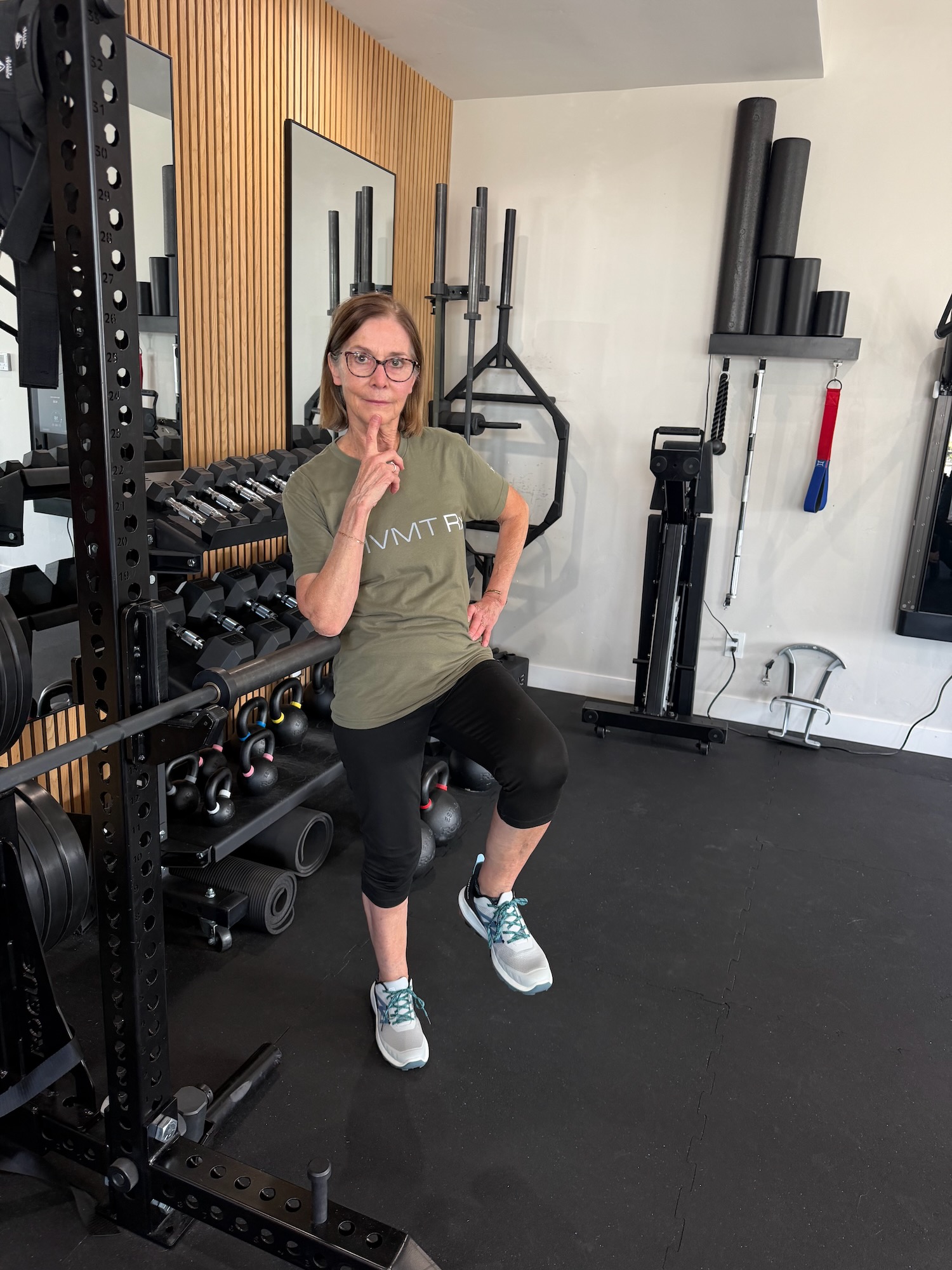
Test 1 — single-leg stance. Fingertip on a wall or rack for balance; you're testing tolerance, not balance. Agnes holds this one pain-free now — hence the pose.
Test 2 — Side Plank
Lie on your side with your knees stacked. Bring your top foot up onto your bottom knee. From this side-plank position, lift your hips off the ground and squeeze the outer glute — the side of your hip. Hold for up to 30 seconds, then flip and do the other side. You're comparing one side to the other, not setting a record.
What counts as positive: your painful side is noticeably weaker or gives out sooner than the other, and/or discomfort or tightness builds right over the outer hip. You'll usually know inside 30 seconds. Don't push through significant pain — once you feel it in that spot, the test has told you what it's going to tell you. Stop there.
That side-to-side difference is the pattern. Research shows women with this condition are on average 32% weaker on the painful side and 23% weaker on the "good" side compared with healthy controls. Both sides are usually deficient. You're feeling that in real time.
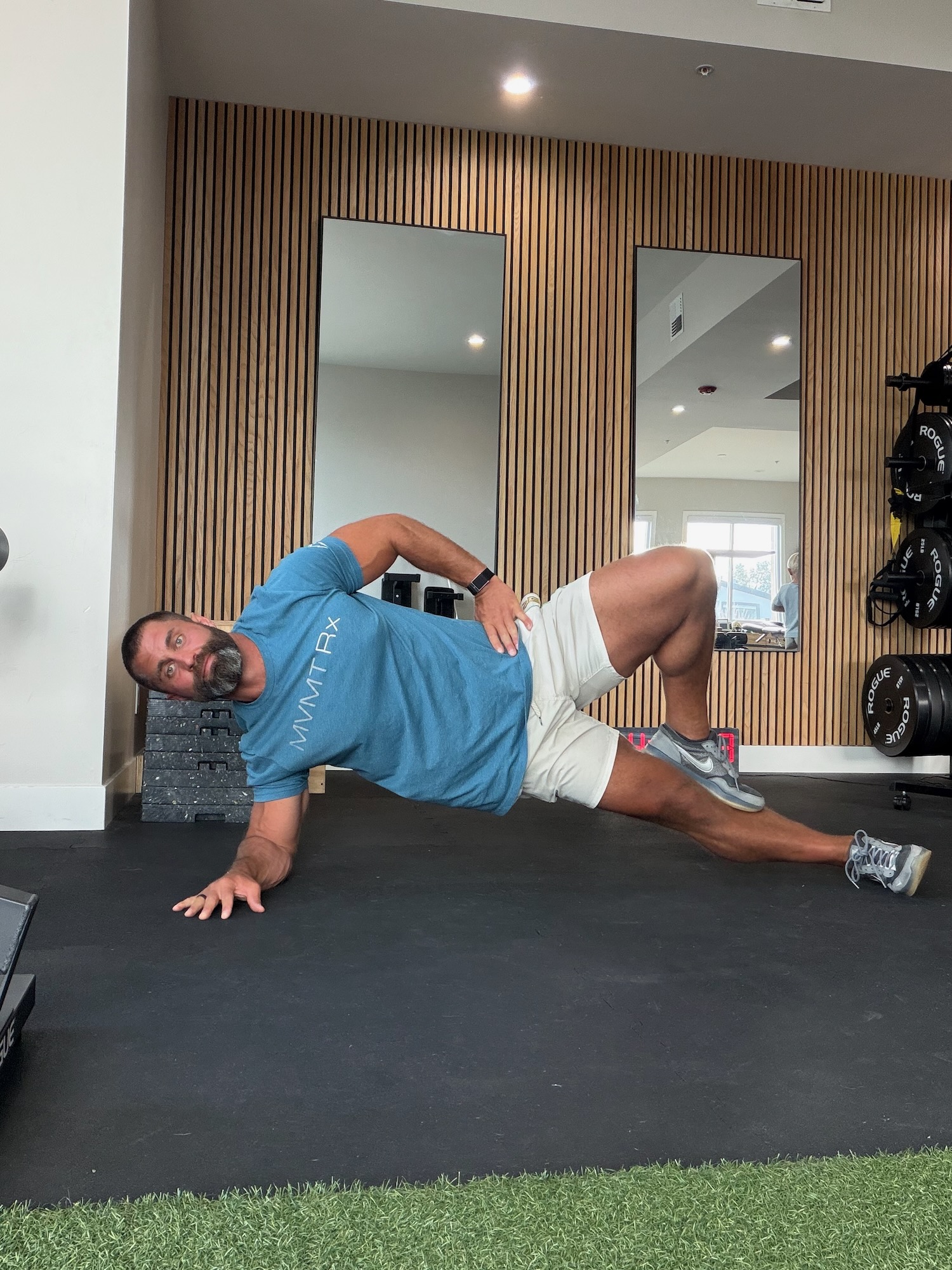
Test 2 — the side plank glute squeeze. Knees stacked, top foot on the bottom knee, hips lifted, outer glute engaged. Compare sides.
These two tests aren't a formal diagnosis — that requires an in-person exam — but combined with the pain pattern above, they're a very strong signal.
Start Today
Step One: Reduce the Daily Compression
You can start improving symptoms this week by changing the postural and activity patterns that squeeze your tendon all day. This is the part you can do on your own — and for a lot of women, it takes the edge off within a couple of weeks.
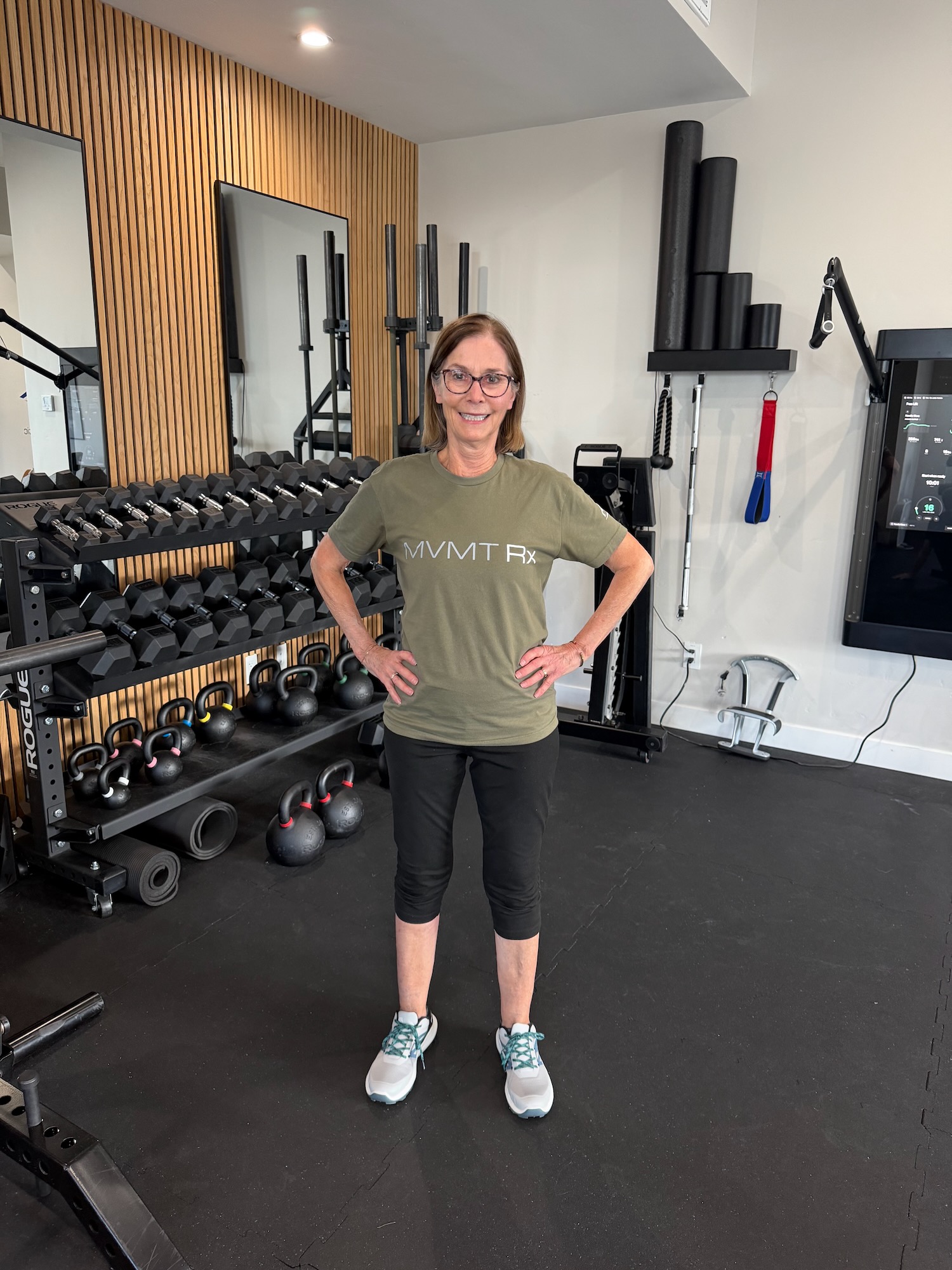
- Standing: stop hanging on one hip. Weight distributed evenly, feet hip-width apart. No crossed legs. Don't let your pelvis push forward.
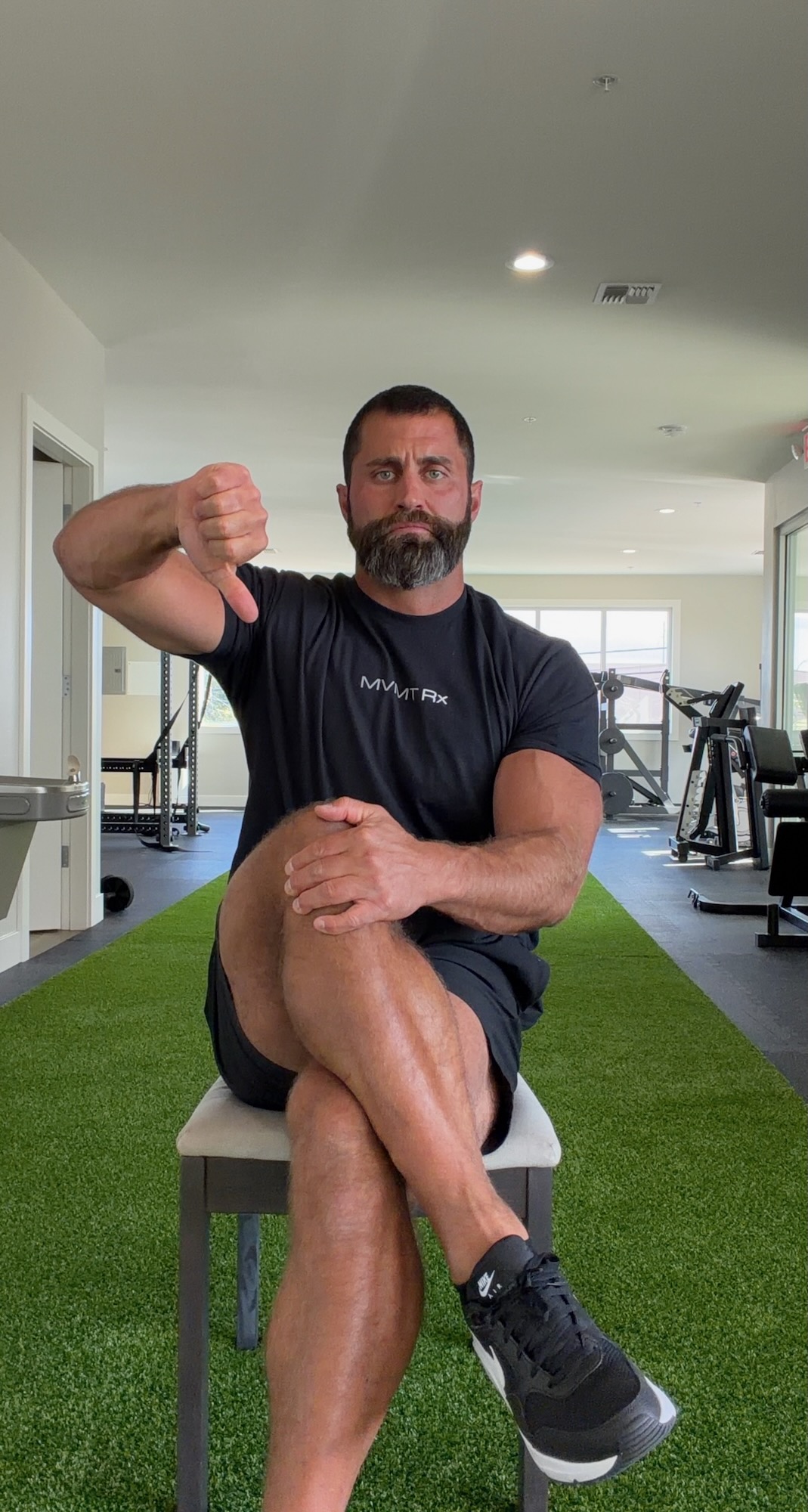
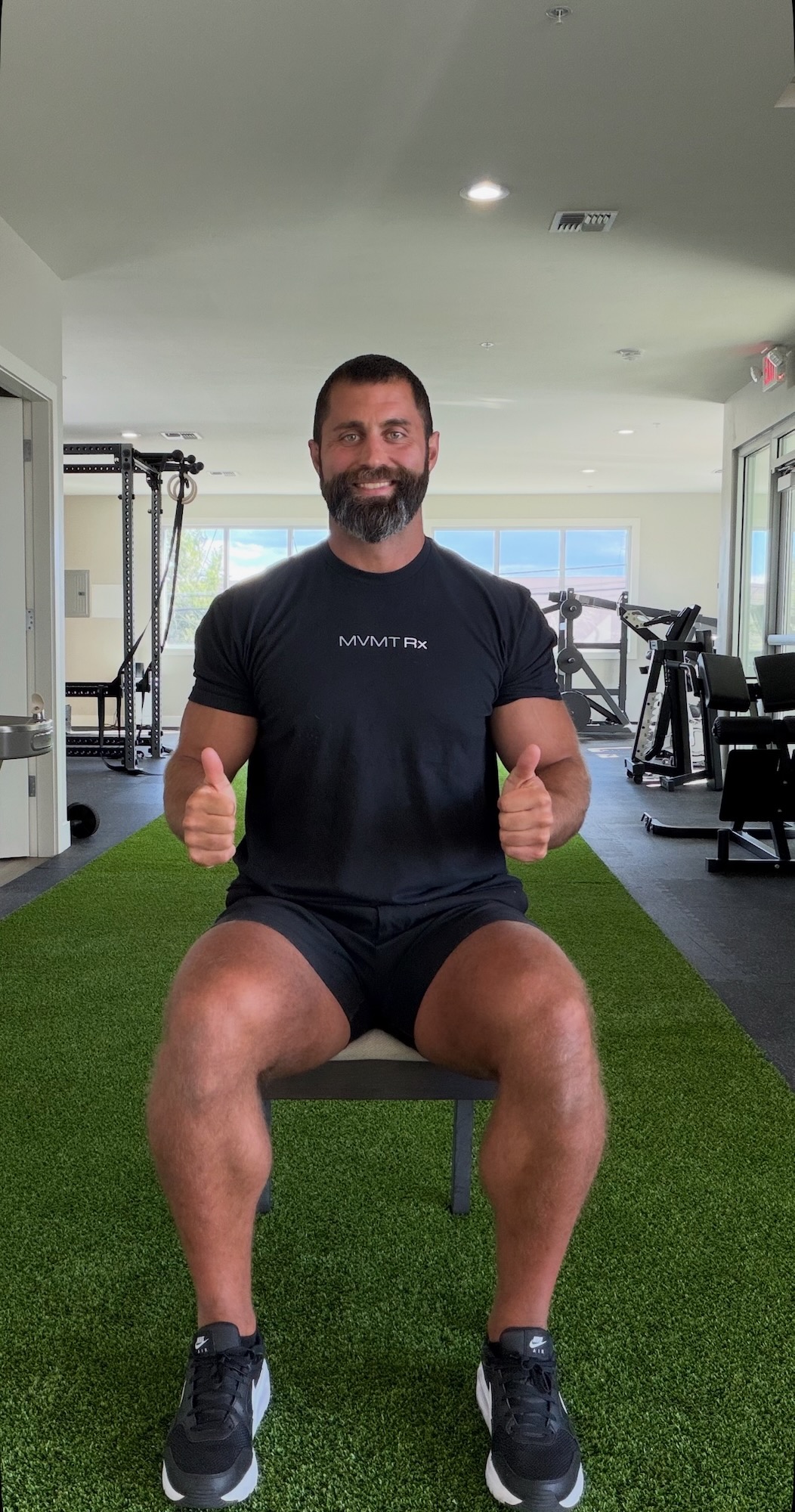
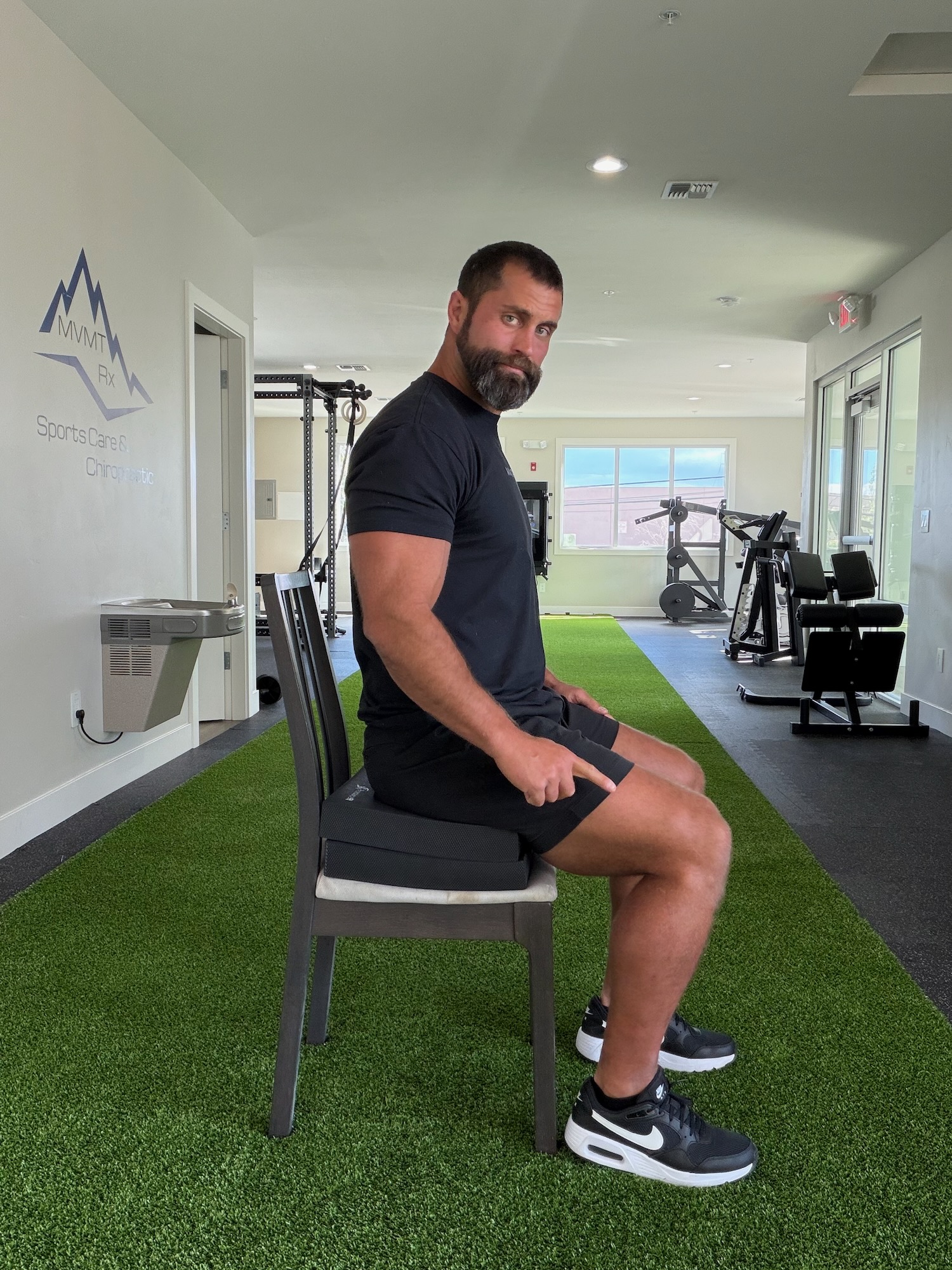
- Sitting: uncross your legs. Hips, knees, and feet roughly in line. Don't sit with your knees pulled together. Avoid low chairs — keep hips slightly higher than knees, or use a wedge cushion. A recliner is easier than a deep couch.
- Sleeping: minimize time on the painful side. On your non-painful side, put a pillow between your knees so the top leg doesn't drop across. On your back is fine — a pillow under the knees often helps.
- Stretching: cut out any stretch that pulls your knee across your body — piriformis, figure-4, pigeon, aggressive lumbar rotation, and ITB stretches. If a stretch feels like it's "hitting the spot," it's almost certainly making it worse.
- Activity: temporarily avoid hills and stair-climbing (or reduce dramatically). Walkers: shorter stride, slower pace, less volume. No plyometrics. If you do Pilates, skip clams and sidelying leg lifts. Use night pain as your barometer.
Standing
Sitting
Side Sleeping
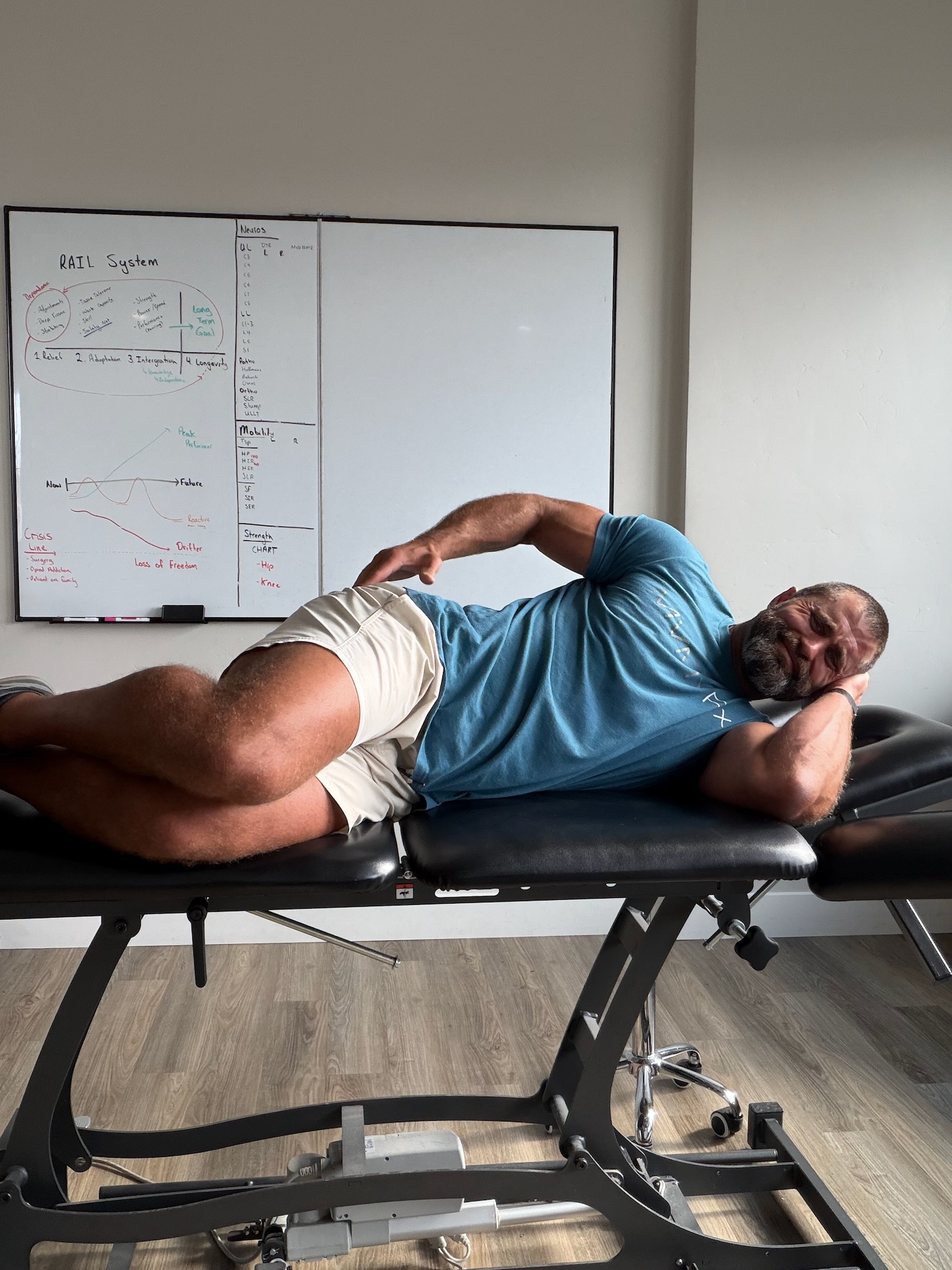
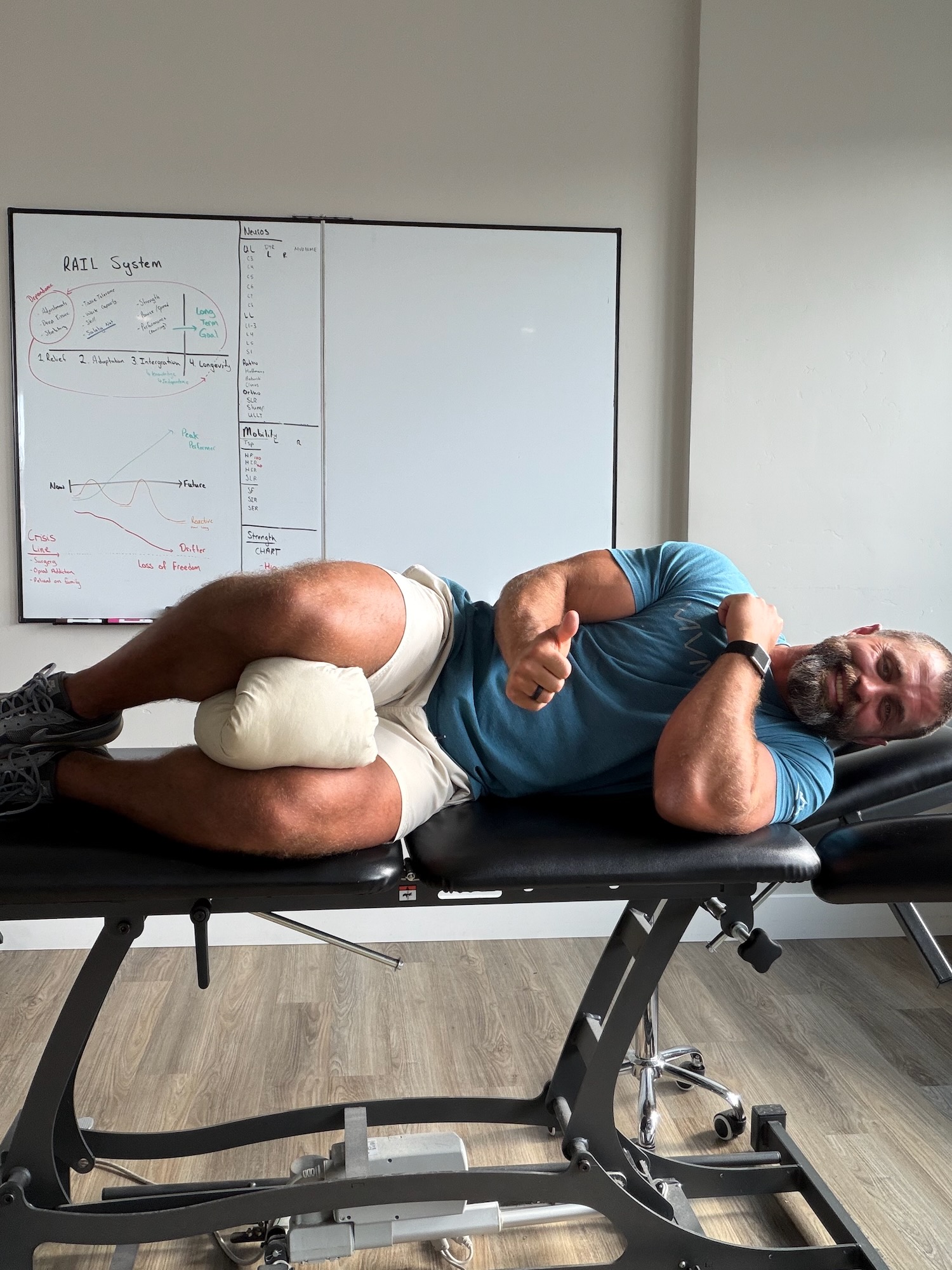
Most patients see noticeable improvement in one to two weeks from these changes alone. But this is only the offloading half — calming it down is not the same as fixing it.
What Actually Fixes It
Why Calming It Down Isn't Enough
Reducing compression makes you hurt less. Rebuilding the tendon is what makes you better — and what makes the results last, so you're not stuck in a cycle of flare, calm, flare, calm.
Come back to the LEAP trial one more time. At one year, the exercise-plus-education group had 80% success — 22 points higher than cortisone and 28 points higher than wait-and-see. The cortisone group's benefit had essentially disappeared by then. The message: tendons adapt to progressive loading — but only when it's the right load, at the right pace, in the right positions, for long enough.
That last part is where it gets hard, and where most self-directed rehab and generic PT protocols fall apart. Load too heavy, too soon and you flare. Load too light and nothing changes. Pick the wrong exercise and you might be squeezing the very tendon you're trying to rebuild. This is what a skilled clinician actually does: assess your specific strength profile, gait pattern, movement habits, and life demands, then build a loading program that matches — and progress it week by week based on how your tendon responds.
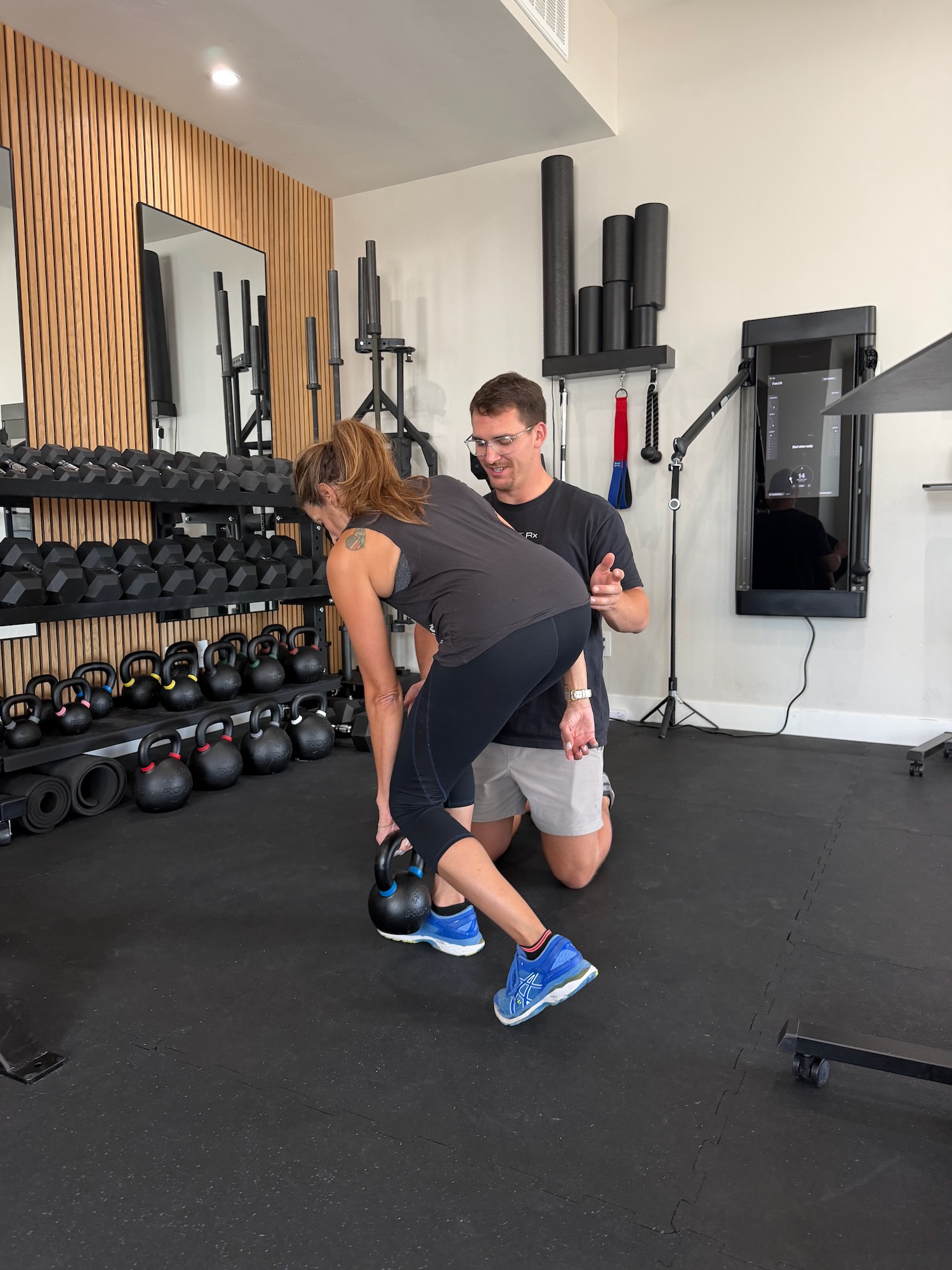
A loaded single-leg RDL — progressive loading under coaching, not clamshells and a printed exercise sheet.
At MVMT Rx we use a framework we call the RAIL System — Relief, Activation, Integration, Lifespan. We calm the tendon down enough to load it, rebuild capacity through progressive loading and pattern retraining, integrate the real demands of your life — hiking, travel, chasing grandkids, whatever matters to you — and then build a maintenance plan so this doesn't come back in three years.
Why generic hip pain programs fail: they use the wrong exercises (clams and sidelying leg lifts that compress the tendon), they never address the daily compressive postures, they rely on stretching that makes tendinopathy worse, they don't progress the load as the tendon adapts, they aren't matched to your specific strength and gait deficits, and they stop after a few weeks when tendons remodel over months. The fix isn't more effort — it's the right load, in the right positions, progressed correctly, for long enough.
What to Expect
What Working With Us Looks Like
Step 1 — Free 30-Minute Discovery Call. A phone call. You describe what's going on. We tell you honestly whether we can help.
Step 2 — Free 60-Minute Discovery Visit. In person at our Sparks office. We assess, confirm what's actually driving your pain, and walk through what a plan would look like.
Step 3 — Full Evaluation and First Treatment Session. If we're the right fit, we complete a full evaluation and start work in the same session — objective testing, hands-on care, and the beginning of your loading program.
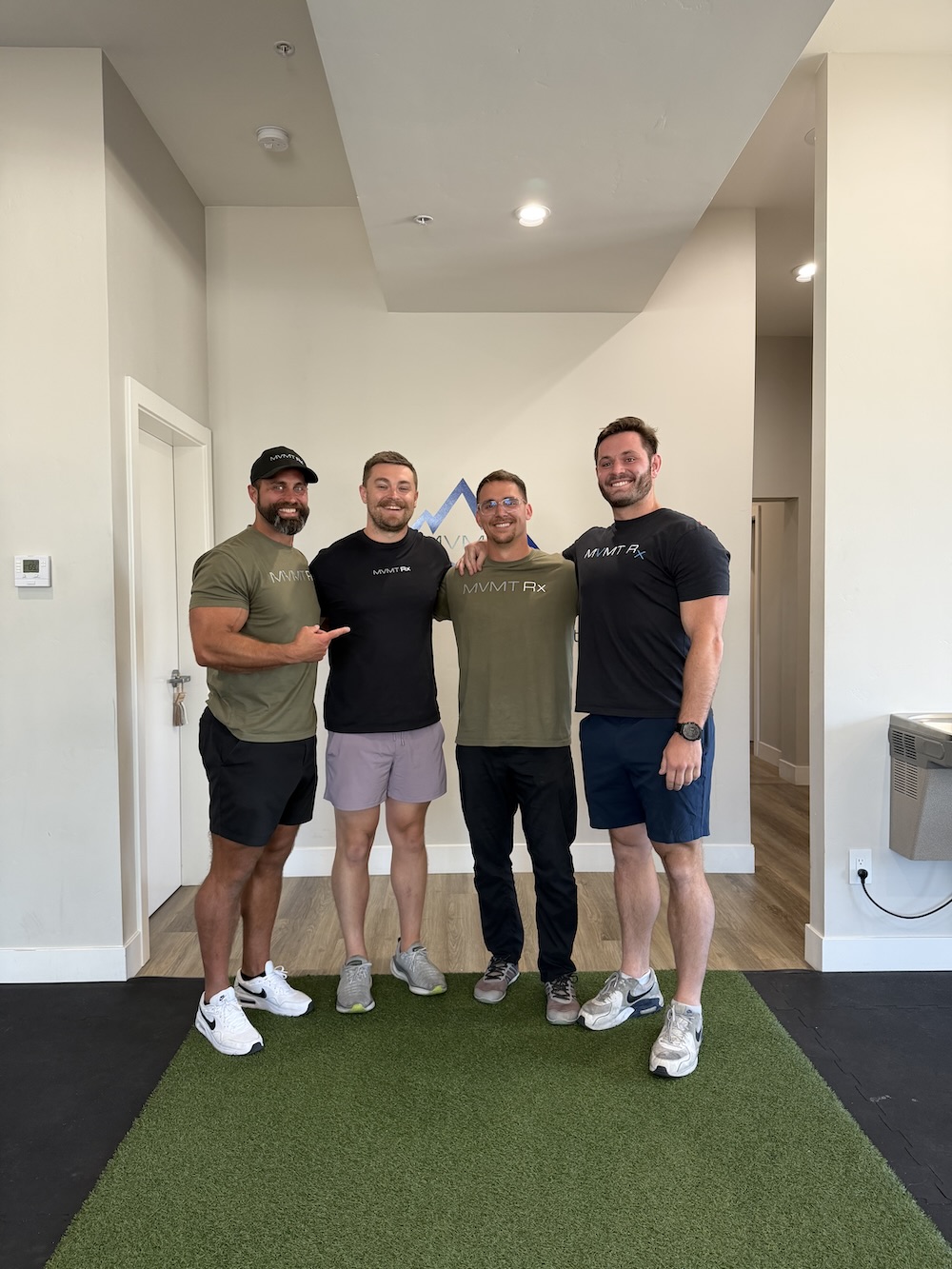
The MVMT Rx clinical team — Sparks, NV. Meet the docs →
MVMT Rx is a sports and performance chiropractic clinic serving Reno and Sparks from Victorian Ave. Sixty-minute, one-on-one sessions, one clinician per patient, root-cause care. No 15-minute conveyor belt. No stretching sheets. We've helped hundreds of women in exactly this situation get their hips back for good — off pain meds, off injections, and out of the endless-treatment cycle.
Learn More: Performance Rehabilitation at MVMT Rx →
How we use progressive loading and the RAIL System to rebuild tendon capacity for lasting results in Reno and Sparks, NV.
Read the Full Guide: Why a Multi-Modal Approach Works →
Our complete breakdown of the RAIL System, our clinical toolkit, and why single-modality care fails for chronic pain.
Related: Hip Pain — Why Stretching and Foam Rolling Aren't Fixing Your Hips →
Clinical myofascial release, DNS, and progressive hip rehabilitation — why self-stretching fails for chronic hip pain.
Related: Moms & Grandmas — Your Low Back Pain Is Not Something You Have to Live With →
The same whole-system, progressive-loading approach applied to chronic low back pain in active women 40–60+.
Ready for Real Answers?
You've been dealing with this long enough. Thirty minutes on the phone — no pressure, no pitch. Just clarity on what's actually going on and what a real plan forward looks like.
Book Your Free Discovery CallMVMT Rx Sports Care & Chiropractic | Reno & Sparks, NV | (775) 245-4142
Frequently Asked Questions
Lateral Hip Pain Questions We Hear Every Week
Is my lateral hip pain bursitis or gluteal tendinopathy?
In the large majority of cases, it's gluteal tendinopathy — a tendon problem, not an inflamed bursa. Imaging studies find true bursa inflammation in only about 8–20% of people with lateral hip pain. The "bursitis" label matters because it leads to anti-inflammatory treatments and cortisone injections that don't address the tendon and often make it worse over time.
Should I get a cortisone injection for my hip pain?
For gluteal tendinopathy, we'd urge caution. In the LEAP trial, cortisone was no better than doing nothing at one year, while exercise plus education reached about 80% success. Research also shows corticosteroid injections weaken tendon tissue. Cortisone can provide a few weeks of relief, but the tissue it weakens is the same tissue that needs to rebuild — a poor trade for a condition that responds to progressive loading.
Why do piriformis stretches make my hip worse?
Most piriformis stretches pull your knee across your body, which puts the hip into adduction — the exact position that compresses the gluteal tendons against the bone underneath. Compression rises sharply in that position, so every "stretch" wrings the painful tendon. Stretching is one of the most common reasons this condition drags on.
Does dry needling help gluteal tendinopathy?
It can take the edge off for a few days, and for some people that window is genuinely useful. What it can't do is change what your tendon tolerates. Tendons adapt to mechanical load — that's the only input that reliably builds capacity. Dry needling delivers no load. So needling can be a reasonable part of the relief phase, but if it's the entire plan, the pain comes back every time the sessions stop. The same is true of massage, cupping, scraping, and ultrasound. Ask any provider offering it one question: what's the loading program that goes with this, and how does it progress?
Can gluteal tendinopathy be mistaken for a low back problem?
Yes — and it happens often. The hip is a primary pain source in a meaningful percentage of people labeled with low back pain, and some patients have even undergone lumbar spine surgery for what was actually a hip tendon issue. A proper exam distinguishes whether your pain is driven by the hip, the lumbar spine, or both — which changes the entire treatment plan.
How long does it take to fix gluteal tendinopathy?
Tendons remodel over months, not weeks. Most women feel meaningful symptom relief within one to two weeks of reducing daily compression, but rebuilding true tendon capacity — the part that makes results last — takes a progressive loading program carried out over a longer timeframe. The exact length depends on how long you've had it, your starting strength, and how consistently the plan is executed.
Do I need a referral or imaging to get started?
No. Gluteal tendinopathy is primarily a clinical diagnosis — a skilled exam combined with your symptom pattern is usually enough to identify it and start treatment. The best first step is our free 30-minute Discovery Call, where we learn what's going on and tell you honestly whether we can help.
Conditions and symptoms we treat at MVMT Rx related to lateral hip pain: gluteal tendinopathy, greater trochanteric pain syndrome, lateral hip pain in women 40–60+, outer hip and outer thigh pain, misdiagnosed hip bursitis, trochanteric bursitis, suspected piriformis syndrome, gluteus medius and gluteus minimus tendinopathy, hip pain that's worse at night and lying on your side, hip pain going up stairs, pain standing on one leg, chronic hip pain after failed cortisone injections, hip pain in peri- and post-menopausal women, hip pain from walking and hiking, lateral hip pain mistaken for low back pain, and hip tendon pain in active women — serving Reno, Sparks, and Northern Nevada.
References
Much of the clinical framework referenced here draws on the work of Dr. Alison Grimaldi, PhD physiotherapist, a leading international authority on gluteal tendinopathy and greater trochanteric pain syndrome.
- Albers IS, Zwerver J, Van den Akker-Scheek I, et al. Incidence and prevalence of lower extremity tendinopathy in the general population. Br J Sports Med. 2014;48(Suppl 2):A5.
- Allison K, Vicenzino B, Wrigley TV, Grimaldi A, Hodges PW, Bennell KL. Hip abductor muscle weakness in individuals with gluteal tendinopathy. Med Sci Sports Exerc. 2016;48(3):346–352.
- Bird PA, Oakley SP, Shnier R, Kirkham BW. Prospective evaluation of magnetic resonance imaging and physical examination findings in patients with greater trochanteric pain syndrome. Arthritis Rheum. 2001;44(9):2138–2145.
- Birnbaum K, Siebert CH, Pandorf T, et al. Anatomical and biomechanical investigations of the iliotibial tract. Surg Radiol Anat. 2004;26(6):433–446.
- Collée G, Dijkmans BAC, Vandenbroucke JP, Cats A. Greater trochanteric pain syndrome (trochanteric bursitis) in low back pain. Scand J Rheumatol. 1991;20(4):262–266.
- Connell DA, Bass C, Sykes CJ, Young D, Edwards E. Sonographic evaluation of gluteus medius and minimus tendinopathy. Eur Radiol. 2003;13(6):1339–1347.
- Dean BJF, Lostis E, Oakley T, Rombach I, Morrey ME, Carr AJ. The risks and benefits of glucocorticoid treatment for tendinopathy: a systematic review. Semin Arthritis Rheum. 2014;43(4):570–576.
- Fearon AM, Cook JL, Scarvell JM, Neeman T, Cormick W, Smith PN. Greater trochanteric pain syndrome negatively affects work, physical activity and quality of life. J Arthroplasty. 2014;29(2):383–386.
- Grimaldi A, Mellor R, Nicolson P, Hodges P, Bennell K, Vicenzino B. Utility of clinical tests to diagnose MRI-confirmed gluteal tendinopathy. Br J Sports Med. 2017;51(6):519–524.
- Mellor R, Bennell K, Grimaldi A, et al. Education plus exercise versus corticosteroid injection use versus a wait and see approach on global outcome and pain from gluteal tendinopathy: prospective, single blinded, randomised clinical trial (LEAP). BMJ. 2018;361:k1662.
- Segal NA, Felson DT, Torner JC, et al. Greater trochanteric pain syndrome: epidemiology and associated factors. Arch Phys Med Rehabil. 2007;88(8):988–992.



Free Guides
Patient Care
Links
© Copyright 2026. MVMT Rx Sports Care & Chiropractic. All Rights Reserved.